01 August 2008

C-dogg comes to town!

A very fit, muttonchopped, post-Primal Quest C-dogg was in NYC for work. He and his co-worker Z rocked the Big Apple with late nights, drinks and nibbles at The Rusty Knot, 230 Fifth, Corner Bistro, Cibar and Pete's Tavern. Having C in town was great fun, but after two post-2am worknights in a row, I'm in dire need of sleep.

I'm off to count sheep. G'night!

23 July 2008

I love mascots

Just not necessarily Olympic ones.

New Olympic Mascot A Trainwreck As Always

In a classic case of overthinking something into oblivion, cities obsess over the stupid mascots for years, until they create some sort of awful mutant-by-committee. The WSJ reports that the Beijing mascot is disliked even by the artist who created them.

Throughout the 70s and 80s, mascots were fairly normal: a tiger, an eagle, a bear, a beaver, a gay dachsund.... In 1992 abstraction took over... Pictures of the Olympic mascots from '92 onwards.

Barcelona 1992: "Cobi." WTF.


Atlanta 1996: "Izzy." No.


Sydney 2000: "Syd, Ollie, and Millie." Why?

Athens 2004: "Athena and Phevos." God.

17 July 2008

Cool and creepy

all at once...

And, kind of romantic too.
Ryan is a friend of a friend. Both he and his gf are pretty cool people. I'm glad Gawker picked it up. Some of the comments were pretty funny, but some seemed meanspirited, which is pretty New York for ya.

09 July 2008

The New York City Waterfalls


The New York City Waterfalls, whose spigots open at the end of the month and run until October...are a pet project of Michael Bloomberg, who is rumored to have personally paid much of the tab and whose office steered the project through a byzantine permit process... Robert Benazzi, the hydraulics designer working with Eliasson, created a system that will suck up the East River, lift it ten stories into the air, and drop it back down, thousands of gallons a minute. He says the only comparably complex job in his 40-year career was designing the sprinkler system for the Sears Tower.

Eliasson [is] a 41-year-old Danish-Icelandic artist who lives in Copenhagen, works in Berlin, and currently has a retrospective at the Museum of Modern Art and P.S. 1... Many of his best-known works explore architecture and the mechanics of perception, almost as if the fantastical imaginings of Buckminster Fuller were reinterpreted by a cognitive scientist. Eliasson’s work is most compelling, however, in its visceral embrace of beauty and wonder, prompting the kinds of basic questions that most of us stopped asking when we were 7 years old.

The waterfalls, he hopes, will provoke New Yorkers to raise similar questions about something we habitually ignore. “You take the water around Manhattan for granted,” Eliasson says... To help restore our sense of engagement with that landscape, he wants “to make water explicit.” It’s a phrase he often employs. “Falling water, it makes a sound, it engages a whole different range of senses. You see gravity. To make it explicit is to take it, hold it up, and let it fall.”

How it works

03 July 2008

I plod too!

This pretty much describes my running lately as well as I train for the NYC Half...

http://completerunning.com/archives/2008/06/27/iplod/

There is plenty of advice here, and on other websites, about how to improve your running. But what do you do on those days when nothing seems to work?

Your intervals are slow. Your strides are uneven. Your mood stinks and you’re completely gassed about halfway through your 12-miler.

I’m a big believer in getting something positive – anything – out of every training run. So when I find myself at the end of my tether and recognize I’m in the middle of a session I’m going to want to immediately forget afterwards, I make the decision to shift into low gear and enter plodding mode.

Of course, sometimes your body utilizes its automatic transmission and shifts into plodding mode all by itself. What I’m suggesting is to decide not to fight it.

Train for it.

The effect is partly psychological but has physiological benefits as well. If you stop being angry with yourself, if you slow down significantly and tend to your body’s needs, your heart rate will level off and you’ll automatically feel better. Some days that’s enough. But I find it works so well that I often end up exiting plodding mode and going back to a steady running pace to finish up strong.

Some people might call these junk miles. Junk is in the eye of the beholder. Excellent runners think all my miles are junk. But one man’s junk is another man’s treasure, and the best way to overcome your fear of disaster during your target race is to prepare for it.

Team Shasta finish Primal Quest

in the Top 20! They're so awesome!
For a blow-by-blow, check out MontainWaz's blog.

02 July 2008

Ok, who's kicking open the fence?


I'll be the pot bellied pig.

Giraffe gathers troops, leads great escape from circus

Fifteen camels, several llamas and a potbellied pig broke out of a circus near Amsterdam on Monday. The ringleader? A giraffe who bolted, too.

Police said the giraffe kicked open a fence and walked out.

"The other animals walked out with him," said Amsterdam police spokesman Rob Van Der Veen.

The animals were part of a traveling circus that had set up its tents in the city of Amstelveen, six miles outside the Dutch Capital.

28 June 2008

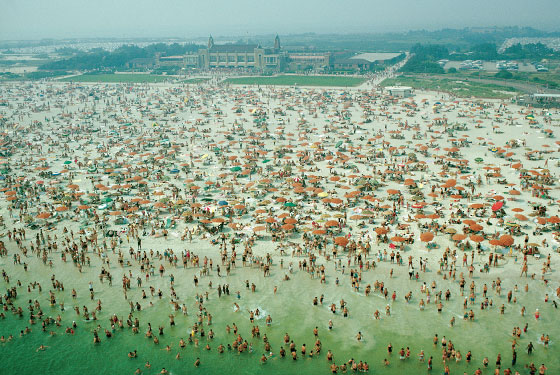
Ways to get to the water this summer

Get Wet

A water obsessive’s guide to beaches, creeks, lakes, swimming holes, and lazy, hazy rivers—all within two hours of midtown Manhattan.

read more digg story


Photoshelter)

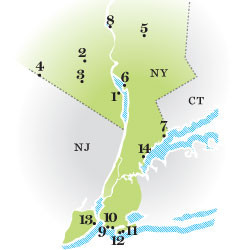
NYC and Upstate


1. ROCKLAND LAKE STATE PARK
Minutes From Midtown: 45
Get There By: Car. I-87 N. to Exit 11, go four miles on Rt. 9W N. Know This: Open sunrise to sunset; $6 per vehicle. Info: 845-268-3020.

2. LAKE WELCH BEACH, HARRIMAN STATE PARK
Minutes From Midtown: 60
Get There By: Car. Palisades Pkwy. to Exit 16.
Cool Off: Largest of Harriman’s seven lakes, with 17 designated swimming areas.
Eats: A concession stand serves all the beach staples, including beer, which must be consumed in the patio area.
Know This: $7 vehicle fee. Info: 845-947-2444.

3. LAKE SEBAGO AND LAKE TIORATI BEACHES, HARRIMAN STATE PARK
Minutes From Midtown: 60
Get There By: Car. See No. 2 directions, above.
Cool Off: Both lakes are less crowded than neighboring Lake Welch; smaller Tiorati gets the most families.
Know This: Weekend swimming 9 a.m. to 7 p.m., weekdays 10 to 6.
$7 per vehicle. Info: 845-351-2583 (Sebago); 845-351-2568 (Tiorati).

4. GREENWOOD LAKE
Minutes From Midtown: 70
Get There By: Car. I-80 W. to I-87 N. to Rt. 17 N.; end on Windmere Ave.
Cool Off: The lake has just one beach, but it’s gorgeous, tucked serenely between Hudson River Valley ridges.
Know This: Open daily 11 a.m. to 7 p.m.; $7 per vehicle. Info: villageofgreenwoodlake.org.

5. CANOPUS LAKE, CLARENCE FAHNESTOCK MEMORIAL STATE PARK
Minutes From Midtown: 75
Get There By: Train. Metro-North to Cold Spring ($20.50 to $27.50 round trip); taxi to park (about $25; 845-265-8294).
Cool Off: Rent a rowboat at the Boathouse ($7 for an hour, $25 for the day) or just hit the beach for a swim.
Know This: Open daily sunrise to sunset. $7 per vehicle; free entrance if you cab it. Info: 845-225-7208.

6. CROTON POINT PARK, CROTON-ON-HUDSON
Minutes From Midtown: 50
Get There By: Car. I-87 to Exit 9, continue on Rt. 9 for ten miles, exit Croton Point Ave.
Cool Off: One of only a handful of places where you can swim cleanly in the Hudson River (and it’s the only spot within an hour’s drive of the city).
Know This: Open weekends only, 10 a.m. to 6:30 p.m.; $8 per vehicle. Info: 914-862-5290.

7. PLAYLAND PARK BEACH, RYE
Minutes From Midtown: 50
Get There By: Train. Metro-North to Rye ($13.50 to $18.50 round trip), bring along a MetroCard to board the Bee-Line Rt. 75 bus to Playland.
Cool Off: The amusement park is cleaner than Coney Island, closer than Six Flags, and faces a beach on a pretty stretch of Long Island Sound.
Eats: Cotton candy till you’re sick. Or Captain Hook’s on the boardwalk for something more substantial (914-925-0075).
Facilities: Rent beach chairs and umbrellas ($3 each), and ditch your valuables in a 75-cent locker at Playland.
Know This: Beach open 10 a.m. to 6:30 p.m.; adults $3, children $2; park admission free. Info: 914-813-7010.

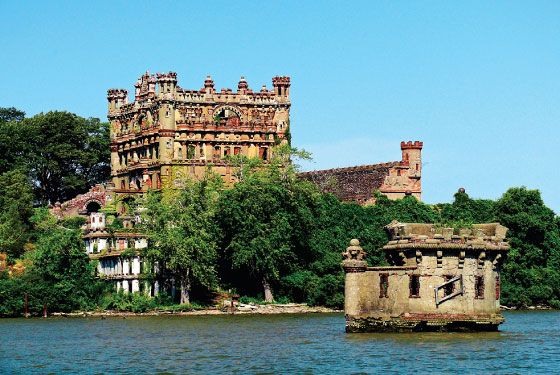
8. POLLEPEL ISLAND, HUDSON RIVER
Minutes From Midtown: 60
Get There By: Train. Metro-North to Cold Spring ($20.50 to $27.50 round trip). Tour operators Hudson Valley Outfitters depart from the Foundry Dock Park across from the station.
Cool Off: Take a guided kayak tour three miles up and down the Hudson that stops mid-river to explore the surreal Bannerman’s Castle.
Eats: A “waterproof” lunch on arrival at the island’s Wee Bay.
Know This: Closed to public except through guided tours. $120 per person. Info: hudsonvalleyoutfitters.com.

9. CONEY ISLAND, BROOKLYN
Minutes From Midtown: 45
Get There By: Subway. D, Q, N, or F train to Stillwell Avenue.
Cool Off: Coney’s 70-acre amusement area has been shorn to just nine measly acres—but the ocean’s still there!
Eats: Two words: Nathan’s Famous (1310 Surf Ave.; 718-946-2202).

10. BRIGHTON BEACH, BROOKLYN
Minutes From Midtown: 50
Get There By: Subway. B or Q to Brighton Beach.
Cool Off: No cleaner or prettier than the neighboring beaches, but where else can you eat a freshly baked pierogi on the sand?
Eats: Grab $6-a-pound pierogies at M&I International Food (249 Brighton Beach Ave.; 718-615-1011).
Know This: Emergency beach gear (chairs, umbrellas, sunscreen) goes for cheap on Stillwell Ave.

11. JACOB RIIS PARK, QUEENS
Minutes From Midtown: 75
Get There By: Subway. A to Rockaway Park–116th St., transfer to the Q35 or Q22.
Cool Off: The so-called People’s Beach is decidedly laid-back; topless bathing is more or less ignored on the eastern stretch.
Eats:Unfurl picnics at the gazebos across from the parking area.
Know This: Beach open daily 9 a.m. to 6 p.m. Info: 718-318-4300.


12. FORT TILDEN, QUEENS
Minutes From Midtown: 80
Get There By: Subway. A to Rockaway Park–116th St., transfer to the Q35 to the Breezy Point–169th St. stop.
Cool Off: The most remote of the city’s public beaches fronts a ruined WWII Army base. Pack a fishing rod and wrestle bluefish from the shore.
Facilities: No toilets or facilities of any type; it’s just you and the dunes.
Know This: Watch your step—poison ivy grows in abundance. Info: 718-318-4300.

13. SOUTH AND MIDLAND BEACHES, STATEN ISLAND
Minutes From Midtown: 70
Get There By: Ferry. Staten Island Ferry to the S51 bus to the beach.
Cool Off: Staten Island’s adjacent beaches are both family- and fisherman-friendly. South Beach has a new fishing pier. Midland holds its next sand-castle competition July 17.
Eats: Seafood lunch at South Fin Grill on the boardwalk (718-447-7679).
Know This: Open daily 10 a.m. to 6 a.m.

14. ORCHARD BEACH, THE BRONX
Minutes From Midtown: 60
Get There By: Subway. 6 to Pelham Bay Park; free transfer to Bx5 or Bx12 bus.
Cool Off: To avoid the crowds—the park can see some 80,000 people on a hot weekend—head out to the beach’s southern- or northernmost points.
Eats: Typical beachside concessions plus Puerto Rican food in the plaza.
Know This: Open daily 10 a.m. to 6 p.m.

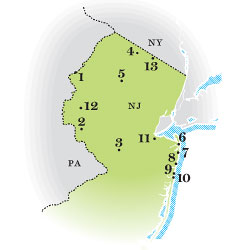
New Jersey


1. KITTATINNY POINT, DELAWARE WATER GAP
Minutes From Midtown: 90
Get There By: Car. Rt. 80 W. to Exit 1.
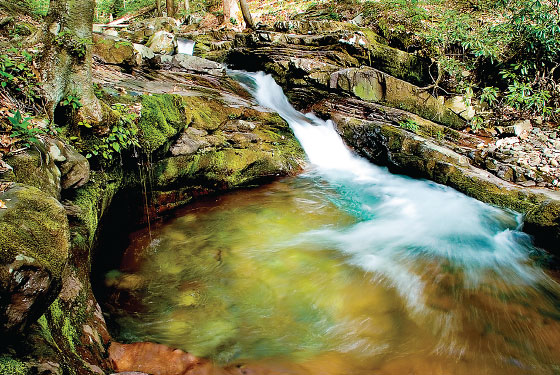
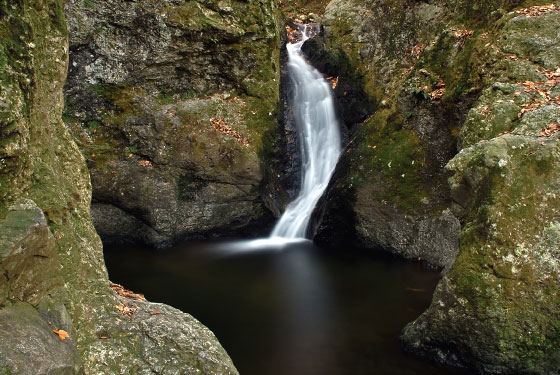
Cool Off: Follow the Blue Dot trail less than a mile along Dunnfield Creek to get to a small waterfall with an icy pool. It’s deep enough for a (very careful) jump from the ten-foot cliffs above.
Eats: Picnic on the summit of Mt. Tammany, picking your fill of wild blueberries along the way.
Know This: Grab a trail map at the Kittatinny Point Visitor Center, opposite the trailhead on the other side of Rt. 80 (908-496-4458).

2. DELAWARE RIVER, FRENCHTOWN
Minutes From Midtown: 80
Get There By: Car. Rt. 78 W. to Exit 15; follow signs for CR 513, left on Rt. 29.
Cool Off: Rent one tube for yourself and one for your beverages, and float together down a lazy, five-mile stretch of the Delaware River. The Delaware River Tubing Co. supplies rafts as well as tubes ($18 to $28; 908-996-5386).
Eats: “The Famous River Hot Dog Man,” Greg Crance, serves free barbecue on an island at the midway point.
Facilities: Changing rooms and key-check at the rental office; free busing to and from the parking lot.

3. D&R CANAL, PRINCETON
Minutes From Midtown: 75
Get There By: Train. New Jersey Transit to Princeton ($22.50 round trip).
Cool Off: Paddle a double kayak through the placid waterway (but don’t jump out; there’s no swimming allowed) and onto Lake Carnegie. Princeton Canoe & Kayak also rents single kayaks and canoes (from $10; 609-452-2403).
Eats: Cool off alongside mammoth beer vats inside Triumph Brewing Company (609-924-7855).
Know This Cash or check only for rentals.

4. TERRACE POND, WAWAYANDA STATE PARK
Minutes From Midtown: 75
Get There By: Car. Rt. 3 W. to Rt. 46 W. to Rt. 23 N. to Clinton Rd.
Cool Off: There’s technically no swimming allowed, but that doesn’t seem to stop people from plunging into Terrace Pond (really a glacial lake) about an hour’s hike up the blue trail.
Eats: Pack a lunch and eat it on any unoccupied cliff along the way. Know This: Info: 973-853-4462.

5. LAKE HOPATCONG
Minutes From Midtown: 60
Get There By: Bus. Lakeland Bus Lines ($20.60 round trip; 973-366-0600).
Cool Off: Swimming in the 2,500-acre lake is limited to a guarded beach, though many rent Jet Skis or boats at nearby marinas and set off for a private cove.
Eats: Stock up on hot dogs and buns at Pathmark, near the bus drop-off.
Know This: Info: 973-398-7010.

6. SANDY HOOK
Minutes From Midtown: 40
Get There By: Ferry. SeaStreak ($43 round trip; 800-262-8743).
Cool Off: If you like to play volleyball in your birthday suit, take the shuttle to nudist-friendly Gunnison Beach. If you’ve got kids, or a more modest disposition, opt for South Beach. Save your back by renting chairs and umbrellas at the beach.
Eats: The Sea Gulls’ Nest has typical bar food and atypical, 360-degree views.
Know This: The last weekend ferry leaves Manhattan before noon and departs Sandy Hook at 5:45. Info: 732-872-5970.

7. MONMOUTH BEACH
Minutes From Midtown: 90
Get There By: Bus. Academy Bus ($25 round trip; 201-420-7000).
Cool Off: Most of the shoreline is private, but the Monmouth Beach Bathing Pavilion is a decent-size stretch with public admission—and it’s less crowded than is typical in northern New Jersey.
Know This: $8 entry fee per person.


National Geographic
Getty Images)

8. SPRING LAKE
Minutes From Midtown: 85
Get There By: Bus. Academy Bus ($30 round trip; 201-420-7000).
Cool Off: Opt for one of Spring Lake’s middle beaches, like Newark Avenue Beach, for a slightly roomier swim (and a slightly longer trek for food and bathrooms).
Know This: $8 entry fee per person (no charge for children 11 and under). Info: 732-449-8005.

9. MANASQUAN
Minutes From Midtown: 95
Get There By: Bus. Academy Bus ($30 round trip; 201-420-7000).
Cool Off: Surfers love the “Manasquan Bowl” at Inlet Beach, where the strong winds and surrounding jetties create up to fifteen-foot swells.
Eats: Join the locals for hot dogs at Carlson’s Corner (432 Beach Front; no phone), a summer-only spot less than a block from the water.
Know This: $6 entry fee per person on weekdays, $7 on weekends.

10. POINT PLEASANT
Minutes From Midtown: 95
Get There By: Bus. Academy Bus ($30 round trip; 201-420-7000).
Cool Off: Get a bird’s-eye view of the crowds below with Point Pleasant Parasail ($65 for single, $120 for doubles; 732-714-2359).
Eats: Great sundaes and “bobsicles” are a five-minute walk down the street at Hoffman’s Ice Cream (732-892-0270).

11. HOOKS CREEK LAKE, CHEESEQUAKE STATE PARK
Minutes From Midtown: 55
Get There By: Car. Garden State Pkwy., Exit 120.
Cool Off: Surrounded by dense trees, the seven-acre lake feels completely removed from the surrounding exurbia (it can still get plenty crowded, though).
Know This: $10 per vehicle on weekends. Info: 732-566-2161.

12. ROUND VALLEY RECREATION AREA, LEBANON
Minutes From Midtown: 45
Get There By: Car. Rt. 78 W. to Exit 20.
Cool Off: Join day swimmers on the west side of the massive, 2,350-acre reservoir. Or if you’re camping, launch a canoe or kayak from the south parking lot.
Know This: $10 per vehicle on weekends. Info: 908-236-6355.

13. SHEPHERD LAKE, RINGWOOD STATE PARK
Minutes From Midtown: 60
Get There By: Car. Take the I-87 N. to Exit 15A.
Cool Off: No matter how humid it is, the spring-fed lake remains refreshingly cool. Added bonus: There are 35 miles of marked hiking trails plus 25 miles of unmarked fire roads, great for mountain biking.
Know This: $10 per vehicle, weekends. Info: 973-962-7031.

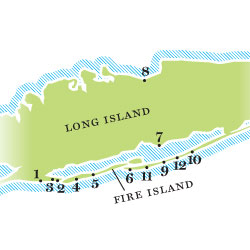
Long Island & Fire Island


1. LONG BEACH
Minutes From Midtown: 50
Get There By: Train. Long Island Rail Road (LIRR) to Long Beach ($18 round trip, includes $10 beach admission).
Cool Off: Surfers come for the waves at Lincoln Blvd., partyers for bars along Park Ave. and West End’s Beech St.
Eats: Plenty of options along Park Ave., or grab a slice at Gino’s Pizzeria (516-432-8193) while you stumble back to the train station. Know This: $10 a person. Info: 516-431-1021.

2. JONES BEACH STATE PARK
Minutes From Midtown: 50
Get There By: Train. LIRR to Freeport, transfer to the N88 bus ($15 round trip).
Cool Off: Despite 6.5 miles of oceanfront, it gets mighty crowded. Field 2 usually provides ample sand space. The bay beach is a kid haven.
Know This: Info: 516-785-1600.

3. NICKERSON BEACH PARK, LIDO
Minutes From Midtown: 55
Get There By: Car. Meadowbrook Pkwy. S. to Loop Pkwy. to Point Lookout. Turn right onto Lido Blvd.
Cool Off: Send the kids off to the adventure playground and skate park while you catch up on your trash reading.
Know This: $20 per vehicle. Info: 516-571-7700.

4. TOBAY BEACH, OYSTER BAY
Minutes From Midtown: 60
Get There By: Car. State Pkwy. to Wantagh State Pkwy., to Jones Beach Causeway.
Cool Off: Few crowds, calm waters, and expansive views. The catch: Nonresidents permitted only Monday through Friday.
Eats: Hit Singletons Seafood Shack for fried goodness (516-826-1610).
Know This: $30 per vehicle. Info: 516-679-3900.

5. ROBERT MOSES STATE PARK
Minutes From Midtown: 75
Get There By: Train. LIRR to Babylon, transfer to the S47 bus ($17 round trip).
Cool Off: Break from all that surfing and fishing you’ve been doing, and try out the 18-hole pitch-and-putt right on the ocean (club rentals $2, course rates $10; 631-669-0449).
Know This: Info: 631-669-0470.

6. CAPTREE STATE PARK
Minutes From Midtown: 70
Get There By: Train. LIRR to Babylon, transfer to the S47 bus (mandatory travel package is $40, $34.50 for kids 11 and under; includes round-trip fare and four hours on a fishing boat).
Cool Off: A fishermen’s Mecca. Admission to Captree covers everything from charter boats to rods to worms.
Eats: Captree Cove’s chowder bar is the place aprés-fish (631-376-1866).
Know This: Info: 631-669-0449.

7. HECKSCHER STATE PARK
Minutes From Midtown: 70
Get There By: Car. Long Island Expy. to the Sagtikos State Pkwy. to Heckscher State Pkwy.
Cool Off: For the wave-phobic, the park offers the calmer waters of Great South Bay and a pool.
Eats: A seven-mile drive puts you at the Gatsby (631-581-1900), a restored mansion in Islip, for dinner.
Know This: $8 per vehicle; pool access $2 for adults, $1 for kids. Info: 631-581-2100.


8. SUNKEN MEADOW STATE PARK
Minutes From Midtown: 60
Get There By: Car. Long Island Expy. to Northern State Pkwy. E. to Sunken Meadow State Pkwy. N.
Cool Off: One of the few major beaches on the Long Island Sound, Sunken Meadow has much calmer swimming than its ocean brethren. The terrain gets prettier to the west, thanks to tall, glacier-formed bluffs.
Eats: Ciro’s 107 in King’s Park (a one-mile drive) serves Italian peasant food and good wines (631-269-2600).
Know This: $8 per vehicle. Info: 631-269-4333.

FIRE ISLAND
9. SAILORS HAVEN

Minutes From Midtown: 90
Get There By: Train. LIRR to Sayville ($24 round trip, includes ferry transport to Fire Island; $5 shuttle to ferry).
Cool Off: As the name implies, the main attraction is the 48-slip public marina. But an even better draw is the boardwalk trail through the serene Sunken Forest.
Know This: Info: 631-597-6183.

10. WATCH HILL BEACH
Minutes From Midtown: 95
Get There By: Train. LIRR to Patchogue ($24 round trip includes ferry transport), short walk to ferry.
Cool Off: Go dune camping: All 26 sites are within earshot of the ocean ($20 a night, two-night minimum; 631-567-6664).

11. OCEAN BEACH
Minutes From Midtown: 100
Get There By: Train. LIRR to Bay Shore ($28 round trip includes ferry transport; $4 taxi to ferry).
Cool Off: No radios, Frisbees, or picnicking on the beach (no alcohol either). But you’re in close proximity to the nightly villagewide frat party.
Know This: Info: 631-583-5940.

12. CHERRY GROVE
Minutes From Midtown: 90
Get There By: Train. LIRR to Sayville ( $20 to $40 round trip, plus $5 shuttle to ferry; $14 round-trip ferry).
Cool Off: Quiet, nudist-filled beach days coupled with wild, stripping-by-disco-light nights.
Eats: Have a beer while you watch the sun set from a second-floor deck of Cherry’s Pit (631-597-6820).

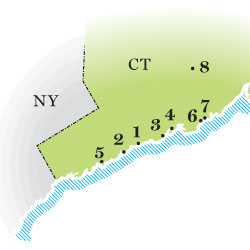
Connecticut


1. SHERWOOD ISLAND STATE PARK
Minutes From Midtown: 75
Get There By: Train. Metro-North to Westport (from $20.42 round trip), cab to the park (about $10; 203-227-5157).
Cool Off: Technically a peninsula, the park is far enough from the mainland that the name seems appropriate. That buzzing you hear is the radio-controlled airplanes rolling stunts in the fields across the parking lot.
Know This: Info: 203-226-6983.

2. CALF PASTURE BEACH
Minutes From Midtown: 60

Get There By: Train. Metro-North to East Norwalk (from $18.52 round trip), then cab or walk to the beach (about $5; 203-853-1267).
Cool Off: Rent kayaks at the Norwalk Sailing School (from $15; 203-852-1857), then paddle the kayak trail to the beaches of Shay and Ram Islands and on to Sheffield Island, where you can tour a 140-year-old lighthouse.
Eats: Stew Leonard’s runs the concession stand, which has everything from hot dogs to whole lobsters (served on weekend nights only).
Know This: Info: 203-854-7806.

3. PENFIELD BEACH, FAIRFIELD
Minutes From Midtown: 75
Get There By: Car. I-95 N. to Exit 21.
Cool Off: After a swim at Penfield or its neighbor, Jennings Beach, walk along the water to the historic Penfield Lighthouse, still in use by the U.S. Coast Guard. Penfield’s jetty is dangerous at high tide, so take a walk on Jennings’s instead.
Eats: Everything from fish and chips to salmon wraps at the Penfield concession stand.
Know This: $15 per vehicle weekdays; $25 on weekends and holidays. Info: 203-256-3191.

4. SEASIDE PARK BEACH
Minutes From Midtown: 120
Get There By: Car. I-95 N. to Exit 27.
Cool Off: Two and a half miles of coastline is hard to beat. But the park itself is also notable—it was designed by Central Park’s Frederick Law Olmsted and Calvert Vaux, and funded by P. T. Barnum as a gift to his hometown, Seaside Park.
Know This: $20 per out-of-state car. Info: 203-576-7233.

5. PEAR TREE POINT BEACH, DARIEN
Minutes From Midtown: 60
Get There By: Car. Take I-95 N. to Exit 10.
Cool Off: A true locals’ spot, in no small part because of the extortionate entrance fees. The soft sand and sheltered waters of the “back beach” are great for kids.
Know This: $40 per car. Info: 203-656-7325.

6. WALNUT BEACH, MILFORD
Minutes From Midtown: 90
Get There By: Car. I-95 N. to Exit 34.
Cool Off: Quieter than a lot of the state’s beaches, and with some of the best sand, too. On a clear day, you can see across the sound.
Eats: No concession stand, though the cafés and restaurants in Milford are within walking distance.
Know This: $5 per vehicle. Info: 203-783-3280.

7. SILVER SANDS STATE PARK
Minutes From Midtown: 90
Get There By: Car. I-95 N. to Exit 35.
Cool Off: Take a low-tide walk out to forested Charles Island, where, legend has it, Captain Kidd stashed his treasure in 1699. Just be sure to find out when the tides are changing, so you don’t get stuck.
Know This: Unlike most of Connecticut’s beaches, it’s free. Info: 203-735-4311.

8. INDIAN WELL STATE PARK
Minutes From Midtown: 100
Get There By: Car. Merritt Pkwy. to Exit 52.
Cool Off: One of the only swim spots in the area, the park is often jammed with Housatonic River splashers.
Know This: $7 per out-of-state car during the week; $10 on weekends and holidays; $4 after 4 p.m. Info: 203-735-4311.

08 June 2008

I'm a type B person. Honest!

The Coffee Junkie’s Guide to Caffeine Addiction

Because the drug is linked to the production of adrenaline and cortisol, hormones which are in turn associated with the fight-or-flight response, says Duke’s James Lane, “for someone with a busy, stressful job, little stresses elicit big responses on caffeine, and big stresses elicit huge responses.” Lane once did a study in which he compared caffeine’s effects on type-A versus type-B personalities. “Caffeine tended to make type Bs into type As,” he says. “Their blood pressure went up. They rose to challenges.” The type As didn’t get any more ambitious; they just became more excitable

read more

Photographs by Mitchell Feinberg. Food styling by Sara Jane.

Caffeine is the world’s most widely used psychoactive substance because it works, and quickly. Caffeine enters the bloodstream almost instantaneously upon ingestion. Within 30 to 45 minutes it has permeated nearly every cell in the body. Because it slips effortlessly across the blood-brain barrier—a sort of filter that prevents bacteria, viruses, and most drugs from entering the brain—it penetrates the cerebral cortex unimpeded. Once inside the central nervous system, caffeine is believed to plug up the receptors of adenosine, a neuromodulator that acts like a brake on nerve cells firing their messages across synapses. With the neural sluice gates open, more messages flood through, resulting, it’s said, in a sense of heightened mental quickness. “It makes people feel good, it increases their arousal and alertness, and makes them more friendly and sociable and talkative,” says Laura Juliano, an American University psychology professor, coffee researcher, and substance-dependence expert. Adenosine is also linked to the onset of sleep; rats injected with it have been observed to keel over unconscious, then wake up a few minutes later. When we pull a coffee-fueled all-nighter, “we’re blocking the adenosine telling us to go to sleep because we’re tired,” says James Lane, a professor of psychology at Duke University Medical Center who has been studying the effects of caffeine since the eighties. Caffeine also greatly aids physical endurance and athletic performance, allowing one to go longer and stronger to such an extent that the International Olympic Committee once limited its use as a performance enhancer, though it lifted the restriction in 2004.

Caffeine is classified pharmacologically as a stimulant, a cousin of cocaine and amphetamines, including Adderall and other substances in the increasingly popular cognitive-improvement prescription-drug toolbox. ... The difference between caffeine and other stimulants is, in part, a matter of degree. Like its pharmacological cousins, caffeine signals the body to release adrenaline (hence the heightened sense of energy). Caffeine also slightly raises levels of dopamine, the brain’s feel-good hormone. Cocaine and amphetamines essentially do the same thing, only they create not just a pleasant feeling but outright euphoria. Methamphetamine and crack, because they’re highly concentrated, create an even more intense feeling. But the higher a drug’s highs, the lower its lows, which is why a crack user needing a fix might rob an elderly neighbor at gunpoint while a coffee drinker might simply get snippy with co-workers.

... a more substantive difference between caffeine and related stimulants. Because the brain develops a tolerance to all of these drugs, ever-increasing quantities are required to achieve the same high. What makes caffeine more desirable, or less potentially dangerous, than other stimulants is its built-in restraining mechanism. Technically called caffeinism, it’s the state in which an overcaffeinated user hits the drug’s “dysphoric” range and is overcome by the shakes, anxiety, tension, and nausea. Caffeine, that is, is self-regulating. “That’s one of the secrets of caffeine and probably why it’s accepted worldwide,” says Roland Griffiths, professor of psychiatry and neuroscience at Johns Hopkins and the unofficial dean of caffeine researchers. “With cocaine and amphetamines, when you increase the doses, you generally get increased stimulation and well-being.” Too much cocaine makes you feel invincible; too much coffee makes you think you’re having a nervous breakdown.

Studies touting newly discovered benefits of coffee and caffeine are published every few weeks. (April 8, 2008, bulletin: Caffeine may help prevent autoimmune diseases such as multiple sclerosis.) Drinking moderate amounts of coffee is believed to slash rates of Parkinson’s disease, inhibit the formation of gallstones, and ward off cirrhosis. It may help prevent Alzheimer’s. Caffeine relieves asthma symptoms by acting as a bronchodilator. Researchers who fed mice caffeinated water found that the animals were less likely to develop skin cancer... One large-scale study showed that a person’s suicide risk decreased with each cup of coffee consumed per day, up to seven cups (notably, though, eight cups or more was shown in a separate study to increase the risk substantially). Caffeine is probably not as bad a diuretic as it’s reputed to be; many nutritionists now believe that a cup of coffee hydrates people about as well as a cup of water... Another study showed that a serving of coffee has more antioxidants than a serving of either grape juice or blueberries.

... And now the bad. A study published earlier this year demonstrated that pregnant women who consume 200 milligrams of caffeine or more per day (that’s less than one Tall Starbucks drip coffee or three six-ounce cups of traditional coffee) are more than twice as likely to have a miscarriage as those who don’t use any. Too much caffeine during gestation may also contribute to low birth weights in children and result in babies born with a caffeine dependence. Large daily doses may also be a factor in female infertility. A study released in late May found that drinking coffee before breakfast could cause blood-glucose levels to rise sharply, which can be dangerous for people with type 2 diabetes. Drinking large amounts of caffeine has been found to exacerbate osteoporosis. And despite the popular idea that caffeine can relieve migraines, doctors say it more often causes them (Caffeine withdrawal seems to be the trigger).

The most serious negative effects of hypercaffeination involve stress and sleeplessness. Because the drug is linked to the production of adrenaline and cortisol, hormones which are in turn associated with the fight-or-flight response, says Duke’s James Lane, “for someone with a busy, stressful job, little stresses elicit big responses on caffeine, and big stresses elicit huge responses.” Lane once did a study in which he compared caffeine’s effects on type-A versus type-B personalities. “Caffeine tended to make type Bs into type As,” he says. “Their blood pressure went up. They rose to challenges.” The type As didn’t get any more ambitious; they just became more excitable. Stress has been linked to everything from cancer to sexual dysfunction to depression. Before she prescribes an antianxiety drug like Xanax, Juliano advises her patients to quit coffee.

31 May 2008

He said WHAT?

Spelling Bee 2008.  A numnah is a pad that goes under the saddle to keep the saddle clean and to cushion the horse's or pony's back.

10 May 2008

So true, it's not even funny...

Every office has one, even Oprah's...

http://www.cnn.com/2008/LIVING/personal/05/06/o.tinkler/index.html

I mosey into the ladies' room, glance at the mirror, remind myself that fluorescent lights make everyone look as if they're in the final stages of tuberculosis, and head for a stall. And then I see it: The seat, even the floor, is covered in little yellow droplets. The Tinkler strikes again.

To date, I have been able to deduce only four things about her:

1. She is female.
2. She attacks between the hours of 10 a.m. and 8 p.m.
3. She works alone.
4. She was raised in a barn.


I've been her victim more times than I can count, and it has turned me from a happy-go-lucky columnist into a bitter, paranoid germaphobe.

06 May 2008

He said WHAT?

"Yeah, I should be punished a little. Like no video games for a week or something."

30 April 2008

OMG they're so cute, I can't help myself.

The Daily Puppy

You Walk Wrong

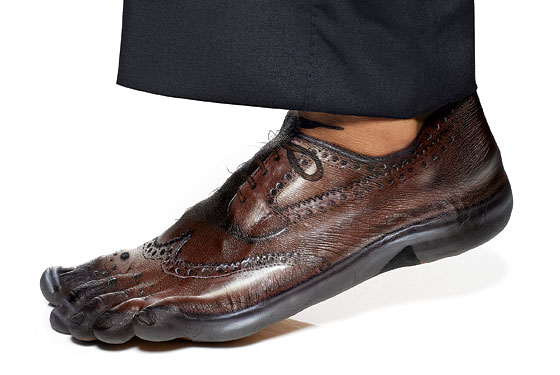
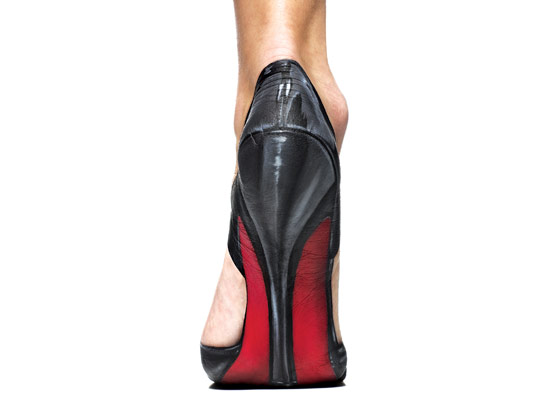
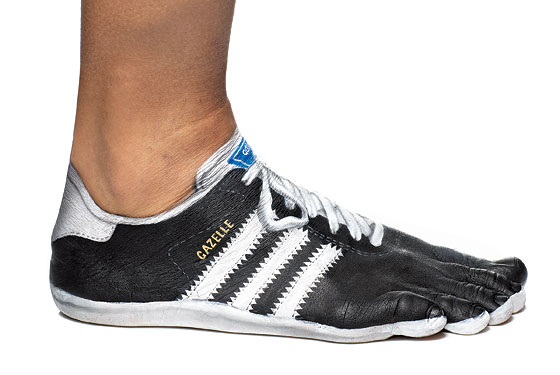
This shoe and the stilettos and Adidas sneakers on the subsequent pages are trompel'oeil paintings applied directly to the feet. Nice as they look, you can't buy them.
Makeup by John Maurad and Jenai Chin.
(Photos: Tom Schierlitz)


It took 4 million years of evolution to perfect the human foot. But we’re wrecking it with every step we take.

You walk wrong.

Look, it’s not your fault. It’s your shoes. Shoes are bad. I don’t just mean stiletto heels, or cowboy boots, or tottering espadrilles, or any of the other fairly obvious foot-torture devices into which we wincingly jam our feet. I mean all shoes. Shoes hurt your feet. They change how you walk. In fact, your feet—your poor, tender, abused, ignored, maligned, misunderstood feet—are getting trounced in a war that’s been raging for roughly a thousand years: the battle of shoes versus feet.

Last year, researchers at the University of the Witwatersrand in Johannesburg, South Africa, published a study titled “Shod Versus Unshod: The Emergence of Forefoot Pathology in Modern Humans?” in the podiatry journal The Foot. The study examined 180 modern humans from three different population groups (Sotho, Zulu, and European), comparing their feet to one another’s, as well as to the feet of 2,000-year-old skeletons. The researchers concluded that, prior to the invention of shoes, people had healthier feet. Among the modern subjects, the Zulu population, which often goes barefoot, had the healthiest feet while the Europeans—i.e., the habitual shoe-wearers—had the unhealthiest.

“Natural gait is biomechanically impossible for any shoe-wearing person,” wrote Dr. William A. Rossi in a 1999 article in Podiatry Management. “It took 4 million years to develop our unique human foot and our consequent distinctive form of gait, a remarkable feat of bioengineering. Yet, in only a few thousand years, and with one carelessly designed instrument, our shoes, we have warped the pure anatomical form of human gait, obstructing its engineering efficiency, afflicting it with strains and stresses and denying it its natural grace of form and ease of movement head to foot.” In other words: Feet good. Shoes bad.

I know what you’re thinking: If shoes are so bad for me, what’s my alternative?

Simple. Walk barefoot.

Okay, now I know what you’re thinking: What’s my other alternative?

29 April 2008

Alexander Hamilton was a known asshole.


But he's still my favorite founding father. Probably because he was an asshole. 221 years after the Federalist Papers were first published,

The home of America's Founding Father, Alexander Hamilton, is being moved one block and then restored to become a museum in Manhattan.

The city hopes the move will attract visitors to the house, where Hamilton lived mostly after he retired from public life.

read more digg story
Moral of the story? Go visit his house! :-)

Laundry laundry

Ok, I'll admit I've been a little obsessed with clothing care lately. I think it's because I have to lug my clothes to the laundromat a few blocks away at least once a week. I hate doing laundry, but I really don't trust anyone to handle my delicates better than I can.
Fabric Care 101
Before you get down and dirty, it's important to know your fibers
How to Wash Cotton
William Abranowicz
How to Wash Cotton

Made from the fluffy fibers of the cotton plant, most cotton fabrics are preshrunk, so “you really can’t mess them up,” says Chris Allsbrooks, a textile analyst at the Drycleaning & Laundry Institute, in Laurel, Maryland.
How to Wash: Machine-wash in cold or warm with all-purpose detergent.
Tip: Sun yellows it; line-dry in shade.

How to Wash Synthetics
William Abranowicz
How to Wash Synthetics

Polyester, nylon, spandex, acrylic, and acetate won’t shrink and will resist water-based stains. Most produce static and may permanently wrinkle in a hot dryer, so dry on low.
How to Wash: Machine-wash in warm with all-purpose detergent.
Tip: Use fabric softener to curb static.

How to Wash Wool
William Abranowicz
How to Wash Wool

Woven from the undercoats of sheep, goats, and other hairy mammals, wool is ultra-durable. But it shrinks in warm water, so take precautions.
How to Wash: Dry-clean or hand wash in cold with mild detergent. Air-dry.
Tip: Use cedar hangers to repel moths.

How to Wash Silk
William Abranowicz
How to Wash Silk

Made from protein fibers produced by silkworms, this durable, luxurious fabric is treated with sizing and may have dyes that bleed.
How to Wash: Dry-clean or hand wash in cold with mild detergent. Air-dry.
Tip: Test for colorfastness.

How to Wash Rayon
William Abranowicz
How to Wash Rayon

Created from wood pulp treated with chemicals, cool and comfortable rayon is considered a semisynthetic fabric. When laundered, it may bleed, shrink, or lose its crispness.
How to Wash: Dry-clean or hand wash in cold with mild detergent. Air-dry.
Tip: Iron it when slightly damp.

How to Wash Linen
William Abranowicz
How to Wash Linen

Linen, woven from fibers of the flax plant, is sometimes treated with sizing, a finish that makes it crisp. It wrinkles very easily and requires ironing.
How to Wash: Dry-clean or hand wash in cold with mild detergent. Air-dry.
Tip: Or machine-wash on gentle.

Spring cleaning is on my mind

How to Clean Clothing and Outerwear
William Abranowicz
You sort your clothes for washing; you should do the same for drying, so you’re not mixing slow- and quick-drying items. And wash your hands after transferring loads to the dryer. “People assume washed clothes are germ-free,” says Sandra Phillips, a cleaning consultant and the author of A Clean Break (Live-Right Books, $10, http://www.amazon.com/Clean-Break-Sandra-Phillips/dp/1880759799). “But the dryer helps kill even more germs.”

Button-Down Shirts
Unfasten all buttons, including the tiny ones at the collar, before laundering. Otherwise, the agitation in the machine and the weight of other garments may cause buttonholes to tear. It’s a good idea to pretreat collars every time you wash them. “Once stains from body oils build up, they are very difficult to remove,” says Chris Allsbrooks, a textile analyst at the Drycleaning & Laundry Institute, in Laurel, Maryland. Use a stain remover (see
Essential Laundry Products), or spot-clean with a mixture of water and liquid detergent. Pour it over the area, then rub with a soft toothbrush. It’s especially important to spot-clean permanent-press shirts and other items that have been treated with resins so they retain their shape, because these fabrics tend to hold soiling. Wash permanent-press shirts with all-purpose detergent on the permanent-press setting, which is gentler than the regular one, uses warm or hot water, and has a long cool-down rinse to further minimize wrinkling. Opt for the dryer’s permanent-press feature, which has a cool-down period at the end. Wash non-permanent-press shirts on the regular cycle in cold or warm water.

Hats and Gloves
Wash knit hats and gloves like sweaters. Spot-clean structured hats, like newsboy and baseball caps, which could become misshapen. You can hand wash gloves with small sections of leather if the leather is the same color as the knit; otherwise bleeding may be a problem. To dry, insert the handle of a wooden spoon in one finger and set the spoon end in a vase. This will help the glove retain its shape.

Down and Polyester Coats
You can wash down coats in front-loading machines with a mild powder detergent and warm water on the gentle cycle. (If you have a top-loader, take these coats to a dry cleaner; most top-loaders have agitators that can compress and displace down filling and prevent pieces from tumbling freely.) Smaller items, like children’s jackets, whether filled with down or polyester, can go in a front- or top-loader on the gentle cycle; tumble dry on low. Put a few clean, dry towels in the dryer to help soak up excess moisture and speed drying.

Sweaters
Many knits made of cotton, synthetics, or blends can be machine-washed in cold or warm water on the gentle cycle with all-purpose or mild detergent. To combat wrinkles and stiffness, dry items on low for 5 to 10 minutes before laying them flat on a mesh sweater rack ($9,
http://www.organizeit.com/) or a towel. Place a wool, cashmere, or fine cotton sweater in a zippered pillowcase; wash on the delicate cycle with cold water and lay flat to dry. Delicate knits, like crochet and silk, are a different story: Dry-clean these, or test for colorfastness (dip a cotton swab in detergent and hold it on an inconspicuous area for two minutes to see if the color bleeds) and hand wash in cold water with mild detergent. Some knits may stretch out; reshape after washing and lay flat to dry.

Jeans
Most denim is top-dyed, meaning only the surface of the fibers is colored. To keep jeans from fading or acquiring white streaks, wash in small loads in cold water (with more water than clothes) with all-purpose detergent. This cuts down on abrasion, says Allsbrooks. “It’s common for jeans to shrink in length” when washed, says Steve Boorstein, author of The Clothing Doctor’s 99 Secrets to Clothing Care (Boutique, $20,
http://www.amazon.com/Clothing-Doctors-Secrets-Cleaning-Care/dp/0971766916). Hold them by the waistband and legs and gently stretch them vertically before drying. Dry on low or medium heat; overdrying causes unnecessary wear and tear, so take jeans out when the legs are done but the seams and the waistband are slightly damp.

24 April 2008

Reality TV is PROBABLY not the solution


Paris Hilton, 27, is using the Internet to cast potential friends for her new reality show, "Paris Hilton's My New BFF."

The MTV series, which begins production next month, will follow 20 contestants as they live together and vie for the chance to be Hilton's permanent plus-one.

Q: Do you think you can find a real, lasting friendship this way? Do you have a preference of male or female?

HILTON: I just want to see the contestants and see how they are. I don't care if it's a boy or a girl, just as long as its someone I can trust, someone I can have fun with and just someone who's going to be able to like handle all the other things that are going to come with being my best friend.

Q: Like what?

HILTON: Just being in the media, just someone who's not going to care about that, just someone who cares about me.

read more digg story

22 April 2008

Women, Repeat This: Don’t Ask, Don’t Get

From the New York Times, by LINDA BABCOCK

Published: April 6, 2008

ABOUT 10 years ago, I heard that my boss was recommending two of my male colleagues for promotion. Both of these men had joined the faculty the same year I was hired, both were good teachers, and both had published important research. They were certainly qualified to move to the next level, from associate professor to full professor.

But so was I. I figured it was just a matter of time before my boss stopped by my office with the good news that he was promoting me, too. So I waited. And waited. As time passed, it became clear that I might be waiting a very long time.

Finally, I worked up the nerve to talk to him about it. I vividly remember his reaction. A big smile spread across his face. “Well, let’s promote you, too!” he said.

When my two male colleagues had asked to be promoted, my boss, seeing that they met all the requirements, readily agreed. Since he was a busy man, he didn’t stop to think about who else was ready for promotion. A question was posed, he answered it, and he went on to the next problem.

About three years later, I held my boss’s job. While hiring two people with similar credentials, a woman and a man, I made each the same salary offer. The woman accepted the offer without negotiating. The man bargained hard, and I had to raise his offer by about 10 percent before he would agree to it.

In between these two events, I watched similar situations play out among my students and friends. Time and again, I saw women accept the status quo, take what they were offered and wait for someone else to decide what they deserved. Men asked for what they wanted and usually got what they asked for.

Prompted by these experiences, I started a research project with several colleagues to study how and when men and women initiate negotiations. In my book “Women Don’t Ask,” I laid out overwhelming evidence that women are much less likely than men to use negotiation to promote their goals and wishes.

With my co-author, Sara Laschever, I also showed that this problem extends into most realms of a woman’s life, hampering her success not just at work but also at home and in her dealings with everyone else in her world: contractors, retailers, service providers, family members, even friends.

I also found strong evidence that this reluctance to promote their own interests is not an innate quality or a genetic blind spot in women. As a society, we teach little girls (and I have a little girl, so I see this all the time) that it’s not nice or feminine or appropriate for them to focus on what they want and pursue their self-interest — and we don’t like it when they do.

The messages girls receive — from parents and teachers, from books they read, from movies and television shows they watch, and from behavior of the adults around them — can be so powerful that as women they may not even understand that their reluctance to ask for what they want is a learned behavior, and one that can be unlearned.

More recent research that I conducted with two colleagues, Hannah Bowles and Lei Lai, points to another reason that women don’t ask: They face a much chillier reaction — from men and from women — when they do negotiate for what they want.

Behavior that can lead a man to be seen as ambitious or a go-getter can brand a woman as too pushy and aggressive. She may be called rude names, receive negative evaluations based solely on her personal style instead of her work and find herself closed out of networks or opportunities from which she might benefit. My boss was pleased that I asked him for what I wanted. A lot of women aren’t so lucky.

I’ve concluded that this is a crucial leadership issue for any organization committed to sound management practices. When I realized that the woman I’d hired would be earning less than the man for doing equivalent work, I called her back and raised her salary. I couldn’t accept this disparity in my organization — not just because it was unfair but because I knew that it was bad for my organization, where it is crucial to attract and keep the best people.

Managers often watch talented women walk out the door when they discover that they’ve been treated inequitably. So good managers need to be on the lookout for these sorts of inequities and take steps to correct them.

THERE’S a lot that women can do, too. They can recognize more opportunities to negotiate and master basic negotiation skills. They can learn how to assess and strengthen their bargaining power; research, prepare and practice before their negotiations; and use strategies that won’t make them seem threatening and provoke a backlash.

I’ve also founded an organization, Progress (heinz.cmu.edu/progress), to teach young girls to negotiate. In partnership with the Girl Scouts, we’ve already developed a negotiation badge that takes girls through a series of 10 activities to develop their negotiation skills. We’ve created a video game that requires girls to negotiate in order to reach the highest levels and win.

We may not consciously realize that we’re tougher on assertive women than we are on men who behave in similar ways. But we need to be diligent on this score.

So the next time you react negatively to the behavior of a strong woman, stop yourself and say instead, “I’m glad she’s going after what she wants.”

Linda Babcock is James M. Walton professor of economics at the Heinz School at Carnegie Mellon University and the author, with Sara Laschever, of “Ask for It” (Bantam Books).

21 April 2008

The wonder fish

Yes, there is a toxin-free, sustainable, farmed fish. And, damn if it ain't tasty. And, like the cows at Chik-Fil-A, it eats chicken.

read more | digg story