30 November 2008

Uh oh, gold diggers may soon have to find real jobs!


With the market in serious trouble, well-to-do bankers and hedge fund guys in search of arm candy is harder to come by.

...being unemployed is not hot. Real estate broker Sammy, a 37-year-old "single girl in the dating scene" (who would rather keep her real name private so that her boss doesn't know she's a gold digger), wrinkles her nose in disgust. "Will I knowingly date somebody who is in the sh--ter right now? Probably not." Sophie agrees, "I would never go out with someone who came up to me and said, 'I don't have a job.' " Emilaya shakes her head. "No, no, no." Even the non-English speaker shakes her head no. It's universal: No banking job, no service.

Engineers Explain Women

25 November 2008

Thank goodness for good friends!

In "Is Urban Loneliness a Myth?" Jennifer Senior explores living alone in the the Big Apple:

Manhattan is the capital of people living by themselves. But are New Yorkers lonelier? Far from it, say a new breed of loneliness researchers, who argue that urban alienation is largely a myth.


There are good public-health reasons to be concerned about loneliness. In the last couple of decades, researchers have started measuring the effects of social isolation, and they aren’t pretty. There’s been an avalanche of studies, for instance, showing that married people are happier and healthier, while the odds of dying increase significantly among the recently widowed, something known as the “widowhood effect.” There’s evidence suggesting that strong social networks help slow the progression of Alzheimer’s. There’s even better evidence suggesting that weak social networks pose as great a risk to heart-attack patients as obesity and hypertension. There’s also evidence to suggest that the religious people who live the longest are the ones who attend services most frequently rather than feel their beliefs most deeply. (It’s not faith that keeps them alive, in other words, but people.)


Studies show that loneliness is associated with morning surges in cortisol, the stress hormone, and increased vascular resistance, which results in higher blood pressure. They also show the lonely drink more, exercise less, get divorced more often, and have more family estrangements and run-ins with the neighbors. And they’re fatter. In one of my favorite experiments described in Loneliness, students were divided into two groups and told to evaluate … bite-size cookies. Specifically, researchers took aside each of the kids in one group and told them that no one wanted to work with them, so they’d have to work on their own. The others, by contrast, were each privately told that everyone wanted to work with them, but they’d still have to work on their own because it would be impossible to work with so many people. Then all of the participants were handed a plate of cookies and told to evaluate them. On average, the ones who had been told they were universally liked ate 4.5. Those who had been told they’d been universally rejected ate 9. “Is it any wonder we turn to ice cream,” the authors ask, “when we’re sitting at home feeling all alone in the world?”


Given how many New Yorkers live alone—in Manhattan, 25.6 percent of households are married, whereas the national average is 49.7—one would think we’d be at an increased risk for practically all these conditions. But Cacioppo points out that loneliness isn’t about objective matters, like whether we live alone. It’s about subjective matters, like whether we feel alone. To determine how satisfied people feel with their relationships, research psychologists generally rely on a twenty-question survey called the UCLA Loneliness Scale, which breaks down our connections into three groups: intimate (whether we have a partner), relational (friends), and collective (church, colleagues, baseball teams, etc.).


The results of these surveys have crucial—and positive—consequences for urban environments. Loneliness, it turns out, is relative. Widows are likely to feel better in a community with more widows (Boca Raton, Florida, say) than a community with only a few single elderly women. And singles are likely to feel better in a town with more singles … like New York. It’s true that marriage is still the best demographic predictor of loneliness. But Cacioppo stresses it’s a very loose predictor. People can have satisfying connections in other ways, after all, and people in bad marriages might as well be on their own: Cacioppo’s latest study, based on a sample of 225 people in the Chicago area, shows that those in unhappy marriages are no less lonely than single people, and might even be more so. Nor do rotten marriages do much for your health. A couple of years ago, Cacioppo teamed up with Linda Waite, co-author of The Case for Marriage: Why Married People Are Happier, Healthier, and Better Off Financially, whose conclusions about the health-positive effects of the institution drove feminists and fatalists like myself into a tizzy. They recruited a new pool of sample subjects and more or less asked the same questions Waite originally did, but also inserted questions to see if their participants were lonely. And what did they discover? That married people were indeed healthier—if they weren’t lonely in their marriages. If they were, the health benefits were so negligible the researchers considered them statistically insignificant.

“In our data,” adds Lisa Berkman, the Harvard epidemiologist who discovered the importance of social networks to heart patients, “friends substitute perfectly well for family.” This finding is important. It may be true that marriage prolongs life. But so, in Berkman’s view, does friendship—and considering how important friendship is to New Yorkers (home of Friends, after all), where so many of us live on our own, this finding is blissfully reassuring. In fact, Berkman has consistently found that living alone poses no health risk, whether she’s looking at 20,000 gas and electricity workers in France or a random sample of almost 7,000 men and women in Alameda, California, so long as her subjects have intimate ties of some kind as well as a variety of weaker ones. Those who are married but don’t have any civic ties or close friends or relatives, for instance, face greater health risks than those who live alone but have lots of friends and regularly volunteer at the local soup kitchen. “Any one connection doesn’t really protect you,” she says. “You need relationships that provide love and intimacy and you need relationships that help you feel like you’re participating in society in some way.”


read more digg story

06 November 2008

Escape from NYC

If I don't find a job soon, I may have to try and find an affordable way to escape to some place sunnier. NYC is depressing in the winter when I don't have an income!

NY Mag offers suggestions for sunny escapes for all budgets, but for someone with a negative income flow, it'll still be a stretch.
read more digg story

05 November 2008

Surprise, you've been rightsized!

Yeah, that's right.

Rightsized.

And, by rightsized, what they actually meant was, downsized.

As in: You have been laid off. Now, get out.

Not surprisingly, just because they called it rightsized didn't make me feel any better about being downsized. It might have made me feel worse. Except that it's not sunk in yet. Because, I'm not upset yet.

As of 10am this morning, I made the walk of shame from my office building down the street to the building that houses my former company's HR department.

I was joined by 3,199 other rightsized employees that made up the 10% reduction of the 32,000 large workforce that the company promise earlier last month. Each of us carried bankers boxes, duffels and shopping bags full of personal items quickly gathered from our desks in the few minutes we had between the time we were told we'd been laid off and the time it took to return to our desks to turn off our computers and leave the building.

We didn't have to speak to each other, we didn't have to make eye contact, and no one had to ask where the other was headed. We were all able to tell who was on the walk of shame with us. We were all able to tell who expected the axe to fall, they were the ones who walked with a spring in the step, relieved that the uncertainty was finally over. We were all able to tell who had hoped they'd be the ones to be asked to leave, they were the ones with expressions of hope, who saw this as an opportunity to pursue their dreams. The saddest to see, however, were those it took by surprise, evidenced by the subtle stoop of defeat in the shoulders, the shopping bags crammed full of banking tombstones, the crystal paperweight presented to employees that have been with the firm for at least 10 years, awards presented by financial associations and preschool drawings with bold headings that read "To: Dad."

Us 3,200. Strangers to each other, and strangely united. We didn't speak to each other. No one was in a talking mood. We didn't make eye contact. Guess no one was in a looking mood. Stone faced, everyone gazed resolutely ahead as we headed to HR.

HR was all business. We walked in, turned in our employee IDs, blackberries, laptops and corporate cards. In exchange, we got our severance packages.

Package is a generous word.

As I left HR, I ran into some former colleagues walking in. We exchanged hugs and made tentative plans for lunch along with lame half jokes about how we'll now have time to have lunch.

Now that we're unemployed, we'll have time to do the things we've always secretly envied others for having the time to do. Our secret envy was also our secret source of superiority and self worth. Our lives were so busy, our jobs so important to us, we never had time for anything other than work.

"So, now we have tons of time, want to do lunch next week?"

"Sure," I say, "let's do lunch."

Welcome to rightsizing.

03 November 2008

A cat obstacle course?!?

WTF! I am strangely fascinated and weirded out at the same time.
An official blueprint for the obstacle course set up last week at Madison Square Garden during the CFA-Iams Cat Championship’s Feline Agility Competition. Revi (pictured), a five-month-old Maine Coon kitten from Richmond, Texas, finished in eight seconds, beating out 29 feline rivals to win the race (which is separate from the best-in-show contest). Her prize: 60 pounds of cat food.

read more

10 October 2008

The Village Petstore and Charcoal Grill

Banksy's NYC installation:


New Yorkers have welcomed the reclusive graffiti artist Banksy with caution.In his first official exhibition in the city, the Briton has set up a fake pet supply shop, complete with large furry animals, rhesus monkeys and rabbits, in Manhattan.

But the would-be creatures are all fakes created by the artist who aimed to question "our relationship with animals and the ethics and sustainability of factory farming" in his work at The Village Pet Store and Charcoal Grill.

His exhibition, which contains no paintings or graffiti, features a robot monkey wearing headphones and watching television in a cage, a fake-rabbit wearing a pearl necklace, and chicken nuggets with legs, busily dipping themselves in sauce.


read more digg story

The Village Petstore and Charcoal Grill

08 October 2008

10 things to love about the credit crunch

LONDON (MarketWatch) -- While the global credit crunch is clearly beginning to bite hard, there are some positives to the financial turmoil that it has wrought.

The U.S. election is no longer leading the news.

Whatever your brother-in-law's brilliant financial move was last year probably looks pretty boneheaded now.

Wall Street bigwigs are exposed as blubbering hypocrites in congressional hearings.

You probably didn't do anything as embarrassing as the head of Iceland's central bank, who issued a statement announcing a 4 billion euro loan from Russia when Moscow hadn't actually agreed to it.

The world will no longer have to spend trillions of dollars to cut carbon emissions since the crisis will do more to reduce greenhouse gases than all the government initiatives, wind farms and cap-and-trade schemes combined.

Capitol Hill bigwigs are exposed as blubbering hypocrites in congressional press conferences.

You probably didn't do anything as embarrassing as Germany's KfW Bankengrouppe, which transferred 300 million euros to Lehman Bros. just before the investment bank filed for bankruptcy.

Instead of foreign aid programs or the United Nations, your tax dollars will now go to fund assistance where it's really needed -- Wall Street.

Gasoline's back down to merely extortionate prices from obscenely extortionate prices.

It's as good a distraction as any from the Chicago Cubs' abject playoff failure.

- Tom Bemis, assistant managing editor

06 October 2008

Hippie, Yippie, Yuppie, Hipster! Schlemiel, Schlimazel, Hasenpfeffer Incorporated!

With New York City caught in the vortex of one of the worst financial crisis in history, is the New York of old to be the New York of new?

Jay McInerney looks back at 20 plus years...


I first remember hearing the Y-word in ’83, when I was living in the East Village... I was enjoying a hung-over midday breakfast (we didn’t use the word brunch in the East Village; it was breakfast whenever you woke up)... An ostentatiously besplattered painter was sitting next to me at the counter, and I heard him mutter, “Fucking yuppies.” I looked up to see a young couple I myself would have characterized as “preppy” waiting to be seated. They looked as if they were visiting from the Upper East Side—all chinos and oxford cloth. We were all uniformly nonconformist in our black jeans and our black Ramones and Television T-shirts. As a Williams alum, I knew all about preppies even before they’d gone mainstream with the publication of The Official Preppy Handbook in 1980. My younger brother, a Deerfield senior, was a preppy. Many of my classmates were preppies. But this yuppie thing was new to me.

The term probably first appeared in print in 1983, when columnist Bob Greene wrote a piece about former Yippie leader Jerry Rubin, who was hosting “networking” events at Studio 54. Greene quoted a participant as saying that Rubin had gone from being the leader of the Yippies to the leader of the yuppies. The neologism stood for Young Urban Professionals and might have gone down in history as yups if not for the Rubin connection. The term yuppies suggested a certain evolutionary—or devolutionary—trajectory from the hippie and the Yippie. The story had everything—the double irony of the revolutionary trickster turned entrepreneurial capitalist cheerleader and the setting in the glam palace of mindless hedonism, as well as a zippy catchphrase that actually seemed to describe an instantly recognizable new minority. Once we had a name for them, we suddenly realized that they were everywhere, like the pod people of Invasion of the Body Snatchers—especially here in New York, the urbanest place of all. We might have even recognized them as us.

From the beginning, there was a certain subject/object confusion associated with the yuppie concept, a certain “we have met the enemy and he is us” self-reflexivity to the phenomenon. Downtown mohawked squatters aside, it was sometimes hard to find a Manhattanite without some taint of the new lifestyle. Did gym membership qualify you as a yuppie? Snorting coke? Eating raw fish? When I heard a movie agent slinging the term at a group of bankers at the Odeon, I wondered about pots and kettles.

“Who are all those upwardly mobile folk with designer water, running shoes, pickled parquet floors, and $450,000 condos in semi-slum buildings?” asked Time magazine in its January 9, 1984, issue. “Yuppies,” we were informed, “are dedicated to the twin goals of making piles of money and achieving perfection through physical fitness and therapy.” The Yuppie Handbook, which had just been published, defined its subject: “(hot new name for Young Urban Professional): A person of either sex who meets the following criteria: (1) resides in or near one of the major cities; (2) claims to be between the ages of 25 and 45; (3) lives on aspirations of glory, prestige, recognition, fame, social status, power, money, or any and all combinations of the above; (4) anyone who brunches on the weekends or works out after work.”

Apparently, the creatures anatomized in The Yuppie Handbook were just common enough to elicit recognition, but not so general as to provoke a shrug. The concepts of “brunching” and “working out” were apparently new and humorous. A few of their defining characteristics—dhurrie rugs, potted ferns, pickled parquet floors—sound suitably dated. But many more—European automobiles, gourmet kitchens, computer literacy, designer clothing, and sushi—fail 25 years later to convey the exoticism that the authors seem to have intended. Oh, those wacky yuppies, eating raw fish and going to the gym.


read more

28 September 2008

Goodbye to one of the best summers ever!

I'm mourning the end of summer. Maybe it's because it's rained four days in a row. Maybe it's because it's dark and gray when I wake up, and dark and gray when I leave work these days. Maybe it's because when it's 8pm, it looks and feels like it's 11pm.

It doesn't really matter. What I'm trying to say is, I'm sad summer's over. This summer has one of the best summers I've ever had, and ... it's done. Sigh. In the next few weeks, I'll try to backfill entries so you know what I've been up to the past few months.

26 September 2008

Happy Birthday J!

J and D come to NYC to celebrate J's big bday!

J's Big Day!

20 September 2008

Who knew an 80s cover band could be so fun?

I caught San Francisco based 80s cover band Tainted Love at BB King's last night.

They were great. They played classic 80s and early 90s hits.

As with all 80s bands, I felt free to make a fool of myself. I sang along to the songs I knew, loudly and out of tune. I danced along badly, like a white guy. And, when I got too tired to dance, I compensated by pumping my fist in the air, like a white guy who can't dance, not even badly.

It was a band and a night that T would have loved.

28 August 2008

Benjamin Shih sounds like KG's dream guy


On paper, at least.

By Matthew Cavnar
Photo: Matthew Nauser

Benjamin Shih, who owns the retro-cool Williamsburg bars Sweet Up’s and the Royal Oak, joined the National Guard in 2005. [Using the] Patriot Express business-loan program for military personnel, Benjamin "got a loan for $150,000.” The money helped Shih, 36, secure the lease on a space at Ludlow and Delancey, where next month he plans to open Hotel Chantelle, a two-floor restaurant he says will look like “what a tasteful Chinese businessman living in Paris would have built in the 1910s, but then aged to 1940.” Underneath, there’s a basement bar called, appropriately enough, SGT’S.

“People are always asking me, how can someone with graduate degrees and who is a liberal go into the service?” Shih says. “This is a question I never get in the Midwest or the South. My response is, you and I are on a social-contract credit card. So why in other parts of the country do we try to pay down that debt? For you, it’s something incomprehensible. For me, it’s something I was raised with.” Shih’s family arrived from Taipei in 1968. “It was the American Dream,” he says. Shih went on to get both a law degree and tattoos, and then worked for Lexis-Nexis. He wanted to be his own boss, and in 2002, he used his savings to open Sweet Up’s. But he always wanted to be in the military, too; he identifies with his fellow soldiers. “They’re often poor, they value education, obligation—the social contract,” he says. “I have a foot in both worlds.”

According to his platoon sergeant, Shih will likely be shipping out, probably to Afghanistan, next year.

Like what you read? digg story

01 August 2008

C-dogg comes to town!

A very fit, muttonchopped, post-Primal Quest C-dogg was in NYC for work. He and his co-worker Z rocked the Big Apple with late nights, drinks and nibbles at The Rusty Knot, 230 Fifth, Corner Bistro, Cibar and Pete's Tavern. Having C in town was great fun, but after two post-2am worknights in a row, I'm in dire need of sleep.

I'm off to count sheep. G'night!

23 July 2008

I love mascots

Just not necessarily Olympic ones.

New Olympic Mascot A Trainwreck As Always

In a classic case of overthinking something into oblivion, cities obsess over the stupid mascots for years, until they create some sort of awful mutant-by-committee. The WSJ reports that the Beijing mascot is disliked even by the artist who created them.

Throughout the 70s and 80s, mascots were fairly normal: a tiger, an eagle, a bear, a beaver, a gay dachsund.... In 1992 abstraction took over... Pictures of the Olympic mascots from '92 onwards.

Barcelona 1992: "Cobi." WTF.


Atlanta 1996: "Izzy." No.


Sydney 2000: "Syd, Ollie, and Millie." Why?

Athens 2004: "Athena and Phevos." God.

17 July 2008

Cool and creepy

all at once...

And, kind of romantic too.
Ryan is a friend of a friend. Both he and his gf are pretty cool people. I'm glad Gawker picked it up. Some of the comments were pretty funny, but some seemed meanspirited, which is pretty New York for ya.

09 July 2008

The New York City Waterfalls


The New York City Waterfalls, whose spigots open at the end of the month and run until October...are a pet project of Michael Bloomberg, who is rumored to have personally paid much of the tab and whose office steered the project through a byzantine permit process... Robert Benazzi, the hydraulics designer working with Eliasson, created a system that will suck up the East River, lift it ten stories into the air, and drop it back down, thousands of gallons a minute. He says the only comparably complex job in his 40-year career was designing the sprinkler system for the Sears Tower.

Eliasson [is] a 41-year-old Danish-Icelandic artist who lives in Copenhagen, works in Berlin, and currently has a retrospective at the Museum of Modern Art and P.S. 1... Many of his best-known works explore architecture and the mechanics of perception, almost as if the fantastical imaginings of Buckminster Fuller were reinterpreted by a cognitive scientist. Eliasson’s work is most compelling, however, in its visceral embrace of beauty and wonder, prompting the kinds of basic questions that most of us stopped asking when we were 7 years old.

The waterfalls, he hopes, will provoke New Yorkers to raise similar questions about something we habitually ignore. “You take the water around Manhattan for granted,” Eliasson says... To help restore our sense of engagement with that landscape, he wants “to make water explicit.” It’s a phrase he often employs. “Falling water, it makes a sound, it engages a whole different range of senses. You see gravity. To make it explicit is to take it, hold it up, and let it fall.”

How it works

03 July 2008

I plod too!

This pretty much describes my running lately as well as I train for the NYC Half...

http://completerunning.com/archives/2008/06/27/iplod/

There is plenty of advice here, and on other websites, about how to improve your running. But what do you do on those days when nothing seems to work?

Your intervals are slow. Your strides are uneven. Your mood stinks and you’re completely gassed about halfway through your 12-miler.

I’m a big believer in getting something positive – anything – out of every training run. So when I find myself at the end of my tether and recognize I’m in the middle of a session I’m going to want to immediately forget afterwards, I make the decision to shift into low gear and enter plodding mode.

Of course, sometimes your body utilizes its automatic transmission and shifts into plodding mode all by itself. What I’m suggesting is to decide not to fight it.

Train for it.

The effect is partly psychological but has physiological benefits as well. If you stop being angry with yourself, if you slow down significantly and tend to your body’s needs, your heart rate will level off and you’ll automatically feel better. Some days that’s enough. But I find it works so well that I often end up exiting plodding mode and going back to a steady running pace to finish up strong.

Some people might call these junk miles. Junk is in the eye of the beholder. Excellent runners think all my miles are junk. But one man’s junk is another man’s treasure, and the best way to overcome your fear of disaster during your target race is to prepare for it.

Team Shasta finish Primal Quest

in the Top 20! They're so awesome!
For a blow-by-blow, check out MontainWaz's blog.

02 July 2008

Ok, who's kicking open the fence?


I'll be the pot bellied pig.

Giraffe gathers troops, leads great escape from circus

Fifteen camels, several llamas and a potbellied pig broke out of a circus near Amsterdam on Monday. The ringleader? A giraffe who bolted, too.

Police said the giraffe kicked open a fence and walked out.

"The other animals walked out with him," said Amsterdam police spokesman Rob Van Der Veen.

The animals were part of a traveling circus that had set up its tents in the city of Amstelveen, six miles outside the Dutch Capital.

28 June 2008

Ways to get to the water this summer

Get Wet

A water obsessive’s guide to beaches, creeks, lakes, swimming holes, and lazy, hazy rivers—all within two hours of midtown Manhattan.

read more digg story


Photoshelter)

NYC and Upstate


1. ROCKLAND LAKE STATE PARK
Minutes From Midtown: 45
Get There By: Car. I-87 N. to Exit 11, go four miles on Rt. 9W N. Know This: Open sunrise to sunset; $6 per vehicle. Info: 845-268-3020.

2. LAKE WELCH BEACH, HARRIMAN STATE PARK
Minutes From Midtown: 60
Get There By: Car. Palisades Pkwy. to Exit 16.
Cool Off: Largest of Harriman’s seven lakes, with 17 designated swimming areas.
Eats: A concession stand serves all the beach staples, including beer, which must be consumed in the patio area.
Know This: $7 vehicle fee. Info: 845-947-2444.

3. LAKE SEBAGO AND LAKE TIORATI BEACHES, HARRIMAN STATE PARK
Minutes From Midtown: 60
Get There By: Car. See No. 2 directions, above.
Cool Off: Both lakes are less crowded than neighboring Lake Welch; smaller Tiorati gets the most families.
Know This: Weekend swimming 9 a.m. to 7 p.m., weekdays 10 to 6.
$7 per vehicle. Info: 845-351-2583 (Sebago); 845-351-2568 (Tiorati).

4. GREENWOOD LAKE
Minutes From Midtown: 70
Get There By: Car. I-80 W. to I-87 N. to Rt. 17 N.; end on Windmere Ave.
Cool Off: The lake has just one beach, but it’s gorgeous, tucked serenely between Hudson River Valley ridges.
Know This: Open daily 11 a.m. to 7 p.m.; $7 per vehicle. Info: villageofgreenwoodlake.org.

5. CANOPUS LAKE, CLARENCE FAHNESTOCK MEMORIAL STATE PARK
Minutes From Midtown: 75
Get There By: Train. Metro-North to Cold Spring ($20.50 to $27.50 round trip); taxi to park (about $25; 845-265-8294).
Cool Off: Rent a rowboat at the Boathouse ($7 for an hour, $25 for the day) or just hit the beach for a swim.
Know This: Open daily sunrise to sunset. $7 per vehicle; free entrance if you cab it. Info: 845-225-7208.

6. CROTON POINT PARK, CROTON-ON-HUDSON
Minutes From Midtown: 50
Get There By: Car. I-87 to Exit 9, continue on Rt. 9 for ten miles, exit Croton Point Ave.
Cool Off: One of only a handful of places where you can swim cleanly in the Hudson River (and it’s the only spot within an hour’s drive of the city).
Know This: Open weekends only, 10 a.m. to 6:30 p.m.; $8 per vehicle. Info: 914-862-5290.

7. PLAYLAND PARK BEACH, RYE
Minutes From Midtown: 50
Get There By: Train. Metro-North to Rye ($13.50 to $18.50 round trip), bring along a MetroCard to board the Bee-Line Rt. 75 bus to Playland.
Cool Off: The amusement park is cleaner than Coney Island, closer than Six Flags, and faces a beach on a pretty stretch of Long Island Sound.
Eats: Cotton candy till you’re sick. Or Captain Hook’s on the boardwalk for something more substantial (914-925-0075).
Facilities: Rent beach chairs and umbrellas ($3 each), and ditch your valuables in a 75-cent locker at Playland.
Know This: Beach open 10 a.m. to 6:30 p.m.; adults $3, children $2; park admission free. Info: 914-813-7010.

8. POLLEPEL ISLAND, HUDSON RIVER
Minutes From Midtown: 60
Get There By: Train. Metro-North to Cold Spring ($20.50 to $27.50 round trip). Tour operators Hudson Valley Outfitters depart from the Foundry Dock Park across from the station.
Cool Off: Take a guided kayak tour three miles up and down the Hudson that stops mid-river to explore the surreal Bannerman’s Castle.
Eats: A “waterproof” lunch on arrival at the island’s Wee Bay.
Know This: Closed to public except through guided tours. $120 per person. Info: hudsonvalleyoutfitters.com.

9. CONEY ISLAND, BROOKLYN
Minutes From Midtown: 45
Get There By: Subway. D, Q, N, or F train to Stillwell Avenue.
Cool Off: Coney’s 70-acre amusement area has been shorn to just nine measly acres—but the ocean’s still there!
Eats: Two words: Nathan’s Famous (1310 Surf Ave.; 718-946-2202).

10. BRIGHTON BEACH, BROOKLYN
Minutes From Midtown: 50
Get There By: Subway. B or Q to Brighton Beach.
Cool Off: No cleaner or prettier than the neighboring beaches, but where else can you eat a freshly baked pierogi on the sand?
Eats: Grab $6-a-pound pierogies at M&I International Food (249 Brighton Beach Ave.; 718-615-1011).
Know This: Emergency beach gear (chairs, umbrellas, sunscreen) goes for cheap on Stillwell Ave.

11. JACOB RIIS PARK, QUEENS
Minutes From Midtown: 75
Get There By: Subway. A to Rockaway Park–116th St., transfer to the Q35 or Q22.
Cool Off: The so-called People’s Beach is decidedly laid-back; topless bathing is more or less ignored on the eastern stretch.
Eats:Unfurl picnics at the gazebos across from the parking area.
Know This: Beach open daily 9 a.m. to 6 p.m. Info: 718-318-4300.


12. FORT TILDEN, QUEENS
Minutes From Midtown: 80
Get There By: Subway. A to Rockaway Park–116th St., transfer to the Q35 to the Breezy Point–169th St. stop.
Cool Off: The most remote of the city’s public beaches fronts a ruined WWII Army base. Pack a fishing rod and wrestle bluefish from the shore.
Facilities: No toilets or facilities of any type; it’s just you and the dunes.
Know This: Watch your step—poison ivy grows in abundance. Info: 718-318-4300.

13. SOUTH AND MIDLAND BEACHES, STATEN ISLAND
Minutes From Midtown: 70
Get There By: Ferry. Staten Island Ferry to the S51 bus to the beach.
Cool Off: Staten Island’s adjacent beaches are both family- and fisherman-friendly. South Beach has a new fishing pier. Midland holds its next sand-castle competition July 17.
Eats: Seafood lunch at South Fin Grill on the boardwalk (718-447-7679).
Know This: Open daily 10 a.m. to 6 a.m.

14. ORCHARD BEACH, THE BRONX
Minutes From Midtown: 60
Get There By: Subway. 6 to Pelham Bay Park; free transfer to Bx5 or Bx12 bus.
Cool Off: To avoid the crowds—the park can see some 80,000 people on a hot weekend—head out to the beach’s southern- or northernmost points.
Eats: Typical beachside concessions plus Puerto Rican food in the plaza.
Know This: Open daily 10 a.m. to 6 p.m.

New Jersey


1. KITTATINNY POINT, DELAWARE WATER GAP
Minutes From Midtown: 90
Get There By: Car. Rt. 80 W. to Exit 1.
Cool Off: Follow the Blue Dot trail less than a mile along Dunnfield Creek to get to a small waterfall with an icy pool. It’s deep enough for a (very careful) jump from the ten-foot cliffs above.
Eats: Picnic on the summit of Mt. Tammany, picking your fill of wild blueberries along the way.
Know This: Grab a trail map at the Kittatinny Point Visitor Center, opposite the trailhead on the other side of Rt. 80 (908-496-4458).

2. DELAWARE RIVER, FRENCHTOWN
Minutes From Midtown: 80
Get There By: Car. Rt. 78 W. to Exit 15; follow signs for CR 513, left on Rt. 29.
Cool Off: Rent one tube for yourself and one for your beverages, and float together down a lazy, five-mile stretch of the Delaware River. The Delaware River Tubing Co. supplies rafts as well as tubes ($18 to $28; 908-996-5386).
Eats: “The Famous River Hot Dog Man,” Greg Crance, serves free barbecue on an island at the midway point.
Facilities: Changing rooms and key-check at the rental office; free busing to and from the parking lot.

3. D&R CANAL, PRINCETON
Minutes From Midtown: 75
Get There By: Train. New Jersey Transit to Princeton ($22.50 round trip).
Cool Off: Paddle a double kayak through the placid waterway (but don’t jump out; there’s no swimming allowed) and onto Lake Carnegie. Princeton Canoe & Kayak also rents single kayaks and canoes (from $10; 609-452-2403).
Eats: Cool off alongside mammoth beer vats inside Triumph Brewing Company (609-924-7855).
Know This Cash or check only for rentals.

4. TERRACE POND, WAWAYANDA STATE PARK
Minutes From Midtown: 75
Get There By: Car. Rt. 3 W. to Rt. 46 W. to Rt. 23 N. to Clinton Rd.
Cool Off: There’s technically no swimming allowed, but that doesn’t seem to stop people from plunging into Terrace Pond (really a glacial lake) about an hour’s hike up the blue trail.
Eats: Pack a lunch and eat it on any unoccupied cliff along the way. Know This: Info: 973-853-4462.

5. LAKE HOPATCONG
Minutes From Midtown: 60
Get There By: Bus. Lakeland Bus Lines ($20.60 round trip; 973-366-0600).
Cool Off: Swimming in the 2,500-acre lake is limited to a guarded beach, though many rent Jet Skis or boats at nearby marinas and set off for a private cove.
Eats: Stock up on hot dogs and buns at Pathmark, near the bus drop-off.
Know This: Info: 973-398-7010.

6. SANDY HOOK
Minutes From Midtown: 40
Get There By: Ferry. SeaStreak ($43 round trip; 800-262-8743).
Cool Off: If you like to play volleyball in your birthday suit, take the shuttle to nudist-friendly Gunnison Beach. If you’ve got kids, or a more modest disposition, opt for South Beach. Save your back by renting chairs and umbrellas at the beach.
Eats: The Sea Gulls’ Nest has typical bar food and atypical, 360-degree views.
Know This: The last weekend ferry leaves Manhattan before noon and departs Sandy Hook at 5:45. Info: 732-872-5970.

7. MONMOUTH BEACH
Minutes From Midtown: 90
Get There By: Bus. Academy Bus ($25 round trip; 201-420-7000).
Cool Off: Most of the shoreline is private, but the Monmouth Beach Bathing Pavilion is a decent-size stretch with public admission—and it’s less crowded than is typical in northern New Jersey.
Know This: $8 entry fee per person.


National Geographic
Getty Images)

8. SPRING LAKE
Minutes From Midtown: 85
Get There By: Bus. Academy Bus ($30 round trip; 201-420-7000).
Cool Off: Opt for one of Spring Lake’s middle beaches, like Newark Avenue Beach, for a slightly roomier swim (and a slightly longer trek for food and bathrooms).
Know This: $8 entry fee per person (no charge for children 11 and under). Info: 732-449-8005.

9. MANASQUAN
Minutes From Midtown: 95
Get There By: Bus. Academy Bus ($30 round trip; 201-420-7000).
Cool Off: Surfers love the “Manasquan Bowl” at Inlet Beach, where the strong winds and surrounding jetties create up to fifteen-foot swells.
Eats: Join the locals for hot dogs at Carlson’s Corner (432 Beach Front; no phone), a summer-only spot less than a block from the water.
Know This: $6 entry fee per person on weekdays, $7 on weekends.

10. POINT PLEASANT
Minutes From Midtown: 95
Get There By: Bus. Academy Bus ($30 round trip; 201-420-7000).
Cool Off: Get a bird’s-eye view of the crowds below with Point Pleasant Parasail ($65 for single, $120 for doubles; 732-714-2359).
Eats: Great sundaes and “bobsicles” are a five-minute walk down the street at Hoffman’s Ice Cream (732-892-0270).

11. HOOKS CREEK LAKE, CHEESEQUAKE STATE PARK
Minutes From Midtown: 55
Get There By: Car. Garden State Pkwy., Exit 120.
Cool Off: Surrounded by dense trees, the seven-acre lake feels completely removed from the surrounding exurbia (it can still get plenty crowded, though).
Know This: $10 per vehicle on weekends. Info: 732-566-2161.

12. ROUND VALLEY RECREATION AREA, LEBANON
Minutes From Midtown: 45
Get There By: Car. Rt. 78 W. to Exit 20.
Cool Off: Join day swimmers on the west side of the massive, 2,350-acre reservoir. Or if you’re camping, launch a canoe or kayak from the south parking lot.
Know This: $10 per vehicle on weekends. Info: 908-236-6355.

13. SHEPHERD LAKE, RINGWOOD STATE PARK
Minutes From Midtown: 60
Get There By: Car. Take the I-87 N. to Exit 15A.
Cool Off: No matter how humid it is, the spring-fed lake remains refreshingly cool. Added bonus: There are 35 miles of marked hiking trails plus 25 miles of unmarked fire roads, great for mountain biking.
Know This: $10 per vehicle, weekends. Info: 973-962-7031.

Long Island & Fire Island


1. LONG BEACH
Minutes From Midtown: 50
Get There By: Train. Long Island Rail Road (LIRR) to Long Beach ($18 round trip, includes $10 beach admission).
Cool Off: Surfers come for the waves at Lincoln Blvd., partyers for bars along Park Ave. and West End’s Beech St.
Eats: Plenty of options along Park Ave., or grab a slice at Gino’s Pizzeria (516-432-8193) while you stumble back to the train station. Know This: $10 a person. Info: 516-431-1021.

2. JONES BEACH STATE PARK
Minutes From Midtown: 50
Get There By: Train. LIRR to Freeport, transfer to the N88 bus ($15 round trip).
Cool Off: Despite 6.5 miles of oceanfront, it gets mighty crowded. Field 2 usually provides ample sand space. The bay beach is a kid haven.
Know This: Info: 516-785-1600.

3. NICKERSON BEACH PARK, LIDO
Minutes From Midtown: 55
Get There By: Car. Meadowbrook Pkwy. S. to Loop Pkwy. to Point Lookout. Turn right onto Lido Blvd.
Cool Off: Send the kids off to the adventure playground and skate park while you catch up on your trash reading.
Know This: $20 per vehicle. Info: 516-571-7700.

4. TOBAY BEACH, OYSTER BAY
Minutes From Midtown: 60
Get There By: Car. State Pkwy. to Wantagh State Pkwy., to Jones Beach Causeway.
Cool Off: Few crowds, calm waters, and expansive views. The catch: Nonresidents permitted only Monday through Friday.
Eats: Hit Singletons Seafood Shack for fried goodness (516-826-1610).
Know This: $30 per vehicle. Info: 516-679-3900.

5. ROBERT MOSES STATE PARK
Minutes From Midtown: 75
Get There By: Train. LIRR to Babylon, transfer to the S47 bus ($17 round trip).
Cool Off: Break from all that surfing and fishing you’ve been doing, and try out the 18-hole pitch-and-putt right on the ocean (club rentals $2, course rates $10; 631-669-0449).
Know This: Info: 631-669-0470.

6. CAPTREE STATE PARK
Minutes From Midtown: 70
Get There By: Train. LIRR to Babylon, transfer to the S47 bus (mandatory travel package is $40, $34.50 for kids 11 and under; includes round-trip fare and four hours on a fishing boat).
Cool Off: A fishermen’s Mecca. Admission to Captree covers everything from charter boats to rods to worms.
Eats: Captree Cove’s chowder bar is the place aprés-fish (631-376-1866).
Know This: Info: 631-669-0449.

7. HECKSCHER STATE PARK
Minutes From Midtown: 70
Get There By: Car. Long Island Expy. to the Sagtikos State Pkwy. to Heckscher State Pkwy.
Cool Off: For the wave-phobic, the park offers the calmer waters of Great South Bay and a pool.
Eats: A seven-mile drive puts you at the Gatsby (631-581-1900), a restored mansion in Islip, for dinner.
Know This: $8 per vehicle; pool access $2 for adults, $1 for kids. Info: 631-581-2100.


8. SUNKEN MEADOW STATE PARK
Minutes From Midtown: 60
Get There By: Car. Long Island Expy. to Northern State Pkwy. E. to Sunken Meadow State Pkwy. N.
Cool Off: One of the few major beaches on the Long Island Sound, Sunken Meadow has much calmer swimming than its ocean brethren. The terrain gets prettier to the west, thanks to tall, glacier-formed bluffs.
Eats: Ciro’s 107 in King’s Park (a one-mile drive) serves Italian peasant food and good wines (631-269-2600).
Know This: $8 per vehicle. Info: 631-269-4333.

FIRE ISLAND
9. SAILORS HAVEN

Minutes From Midtown: 90
Get There By: Train. LIRR to Sayville ($24 round trip, includes ferry transport to Fire Island; $5 shuttle to ferry).
Cool Off: As the name implies, the main attraction is the 48-slip public marina. But an even better draw is the boardwalk trail through the serene Sunken Forest.
Know This: Info: 631-597-6183.

10. WATCH HILL BEACH
Minutes From Midtown: 95
Get There By: Train. LIRR to Patchogue ($24 round trip includes ferry transport), short walk to ferry.
Cool Off: Go dune camping: All 26 sites are within earshot of the ocean ($20 a night, two-night minimum; 631-567-6664).

11. OCEAN BEACH
Minutes From Midtown: 100
Get There By: Train. LIRR to Bay Shore ($28 round trip includes ferry transport; $4 taxi to ferry).
Cool Off: No radios, Frisbees, or picnicking on the beach (no alcohol either). But you’re in close proximity to the nightly villagewide frat party.
Know This: Info: 631-583-5940.

12. CHERRY GROVE
Minutes From Midtown: 90
Get There By: Train. LIRR to Sayville ( $20 to $40 round trip, plus $5 shuttle to ferry; $14 round-trip ferry).
Cool Off: Quiet, nudist-filled beach days coupled with wild, stripping-by-disco-light nights.
Eats: Have a beer while you watch the sun set from a second-floor deck of Cherry’s Pit (631-597-6820).

Connecticut


1. SHERWOOD ISLAND STATE PARK
Minutes From Midtown: 75
Get There By: Train. Metro-North to Westport (from $20.42 round trip), cab to the park (about $10; 203-227-5157).
Cool Off: Technically a peninsula, the park is far enough from the mainland that the name seems appropriate. That buzzing you hear is the radio-controlled airplanes rolling stunts in the fields across the parking lot.
Know This: Info: 203-226-6983.

2. CALF PASTURE BEACH
Minutes From Midtown: 60

Get There By: Train. Metro-North to East Norwalk (from $18.52 round trip), then cab or walk to the beach (about $5; 203-853-1267).
Cool Off: Rent kayaks at the Norwalk Sailing School (from $15; 203-852-1857), then paddle the kayak trail to the beaches of Shay and Ram Islands and on to Sheffield Island, where you can tour a 140-year-old lighthouse.
Eats: Stew Leonard’s runs the concession stand, which has everything from hot dogs to whole lobsters (served on weekend nights only).
Know This: Info: 203-854-7806.

3. PENFIELD BEACH, FAIRFIELD
Minutes From Midtown: 75
Get There By: Car. I-95 N. to Exit 21.
Cool Off: After a swim at Penfield or its neighbor, Jennings Beach, walk along the water to the historic Penfield Lighthouse, still in use by the U.S. Coast Guard. Penfield’s jetty is dangerous at high tide, so take a walk on Jennings’s instead.
Eats: Everything from fish and chips to salmon wraps at the Penfield concession stand.
Know This: $15 per vehicle weekdays; $25 on weekends and holidays. Info: 203-256-3191.

4. SEASIDE PARK BEACH
Minutes From Midtown: 120
Get There By: Car. I-95 N. to Exit 27.
Cool Off: Two and a half miles of coastline is hard to beat. But the park itself is also notable—it was designed by Central Park’s Frederick Law Olmsted and Calvert Vaux, and funded by P. T. Barnum as a gift to his hometown, Seaside Park.
Know This: $20 per out-of-state car. Info: 203-576-7233.

5. PEAR TREE POINT BEACH, DARIEN
Minutes From Midtown: 60
Get There By: Car. Take I-95 N. to Exit 10.
Cool Off: A true locals’ spot, in no small part because of the extortionate entrance fees. The soft sand and sheltered waters of the “back beach” are great for kids.
Know This: $40 per car. Info: 203-656-7325.

6. WALNUT BEACH, MILFORD
Minutes From Midtown: 90
Get There By: Car. I-95 N. to Exit 34.
Cool Off: Quieter than a lot of the state’s beaches, and with some of the best sand, too. On a clear day, you can see across the sound.
Eats: No concession stand, though the cafés and restaurants in Milford are within walking distance.
Know This: $5 per vehicle. Info: 203-783-3280.

7. SILVER SANDS STATE PARK
Minutes From Midtown: 90
Get There By: Car. I-95 N. to Exit 35.
Cool Off: Take a low-tide walk out to forested Charles Island, where, legend has it, Captain Kidd stashed his treasure in 1699. Just be sure to find out when the tides are changing, so you don’t get stuck.
Know This: Unlike most of Connecticut’s beaches, it’s free. Info: 203-735-4311.

8. INDIAN WELL STATE PARK
Minutes From Midtown: 100
Get There By: Car. Merritt Pkwy. to Exit 52.
Cool Off: One of the only swim spots in the area, the park is often jammed with Housatonic River splashers.
Know This: $7 per out-of-state car during the week; $10 on weekends and holidays; $4 after 4 p.m. Info: 203-735-4311.

08 June 2008

I'm a type B person. Honest!

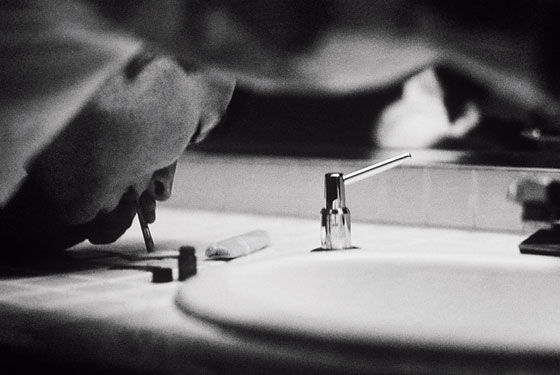
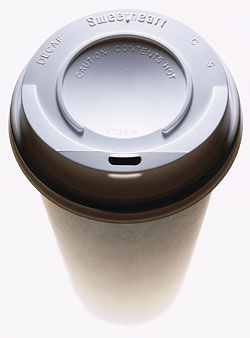
The Coffee Junkie’s Guide to Caffeine Addiction

Because the drug is linked to the production of adrenaline and cortisol, hormones which are in turn associated with the fight-or-flight response, says Duke’s James Lane, “for someone with a busy, stressful job, little stresses elicit big responses on caffeine, and big stresses elicit huge responses.” Lane once did a study in which he compared caffeine’s effects on type-A versus type-B personalities. “Caffeine tended to make type Bs into type As,” he says. “Their blood pressure went up. They rose to challenges.” The type As didn’t get any more ambitious; they just became more excitable

read more

Photographs by Mitchell Feinberg. Food styling by Sara Jane.

Caffeine is the world’s most widely used psychoactive substance because it works, and quickly. Caffeine enters the bloodstream almost instantaneously upon ingestion. Within 30 to 45 minutes it has permeated nearly every cell in the body. Because it slips effortlessly across the blood-brain barrier—a sort of filter that prevents bacteria, viruses, and most drugs from entering the brain—it penetrates the cerebral cortex unimpeded. Once inside the central nervous system, caffeine is believed to plug up the receptors of adenosine, a neuromodulator that acts like a brake on nerve cells firing their messages across synapses. With the neural sluice gates open, more messages flood through, resulting, it’s said, in a sense of heightened mental quickness. “It makes people feel good, it increases their arousal and alertness, and makes them more friendly and sociable and talkative,” says Laura Juliano, an American University psychology professor, coffee researcher, and substance-dependence expert. Adenosine is also linked to the onset of sleep; rats injected with it have been observed to keel over unconscious, then wake up a few minutes later. When we pull a coffee-fueled all-nighter, “we’re blocking the adenosine telling us to go to sleep because we’re tired,” says James Lane, a professor of psychology at Duke University Medical Center who has been studying the effects of caffeine since the eighties. Caffeine also greatly aids physical endurance and athletic performance, allowing one to go longer and stronger to such an extent that the International Olympic Committee once limited its use as a performance enhancer, though it lifted the restriction in 2004.

Caffeine is classified pharmacologically as a stimulant, a cousin of cocaine and amphetamines, including Adderall and other substances in the increasingly popular cognitive-improvement prescription-drug toolbox. ... The difference between caffeine and other stimulants is, in part, a matter of degree. Like its pharmacological cousins, caffeine signals the body to release adrenaline (hence the heightened sense of energy). Caffeine also slightly raises levels of dopamine, the brain’s feel-good hormone. Cocaine and amphetamines essentially do the same thing, only they create not just a pleasant feeling but outright euphoria. Methamphetamine and crack, because they’re highly concentrated, create an even more intense feeling. But the higher a drug’s highs, the lower its lows, which is why a crack user needing a fix might rob an elderly neighbor at gunpoint while a coffee drinker might simply get snippy with co-workers.

... a more substantive difference between caffeine and related stimulants. Because the brain develops a tolerance to all of these drugs, ever-increasing quantities are required to achieve the same high. What makes caffeine more desirable, or less potentially dangerous, than other stimulants is its built-in restraining mechanism. Technically called caffeinism, it’s the state in which an overcaffeinated user hits the drug’s “dysphoric” range and is overcome by the shakes, anxiety, tension, and nausea. Caffeine, that is, is self-regulating. “That’s one of the secrets of caffeine and probably why it’s accepted worldwide,” says Roland Griffiths, professor of psychiatry and neuroscience at Johns Hopkins and the unofficial dean of caffeine researchers. “With cocaine and amphetamines, when you increase the doses, you generally get increased stimulation and well-being.” Too much cocaine makes you feel invincible; too much coffee makes you think you’re having a nervous breakdown.

Studies touting newly discovered benefits of coffee and caffeine are published every few weeks. (April 8, 2008, bulletin: Caffeine may help prevent autoimmune diseases such as multiple sclerosis.) Drinking moderate amounts of coffee is believed to slash rates of Parkinson’s disease, inhibit the formation of gallstones, and ward off cirrhosis. It may help prevent Alzheimer’s. Caffeine relieves asthma symptoms by acting as a bronchodilator. Researchers who fed mice caffeinated water found that the animals were less likely to develop skin cancer... One large-scale study showed that a person’s suicide risk decreased with each cup of coffee consumed per day, up to seven cups (notably, though, eight cups or more was shown in a separate study to increase the risk substantially). Caffeine is probably not as bad a diuretic as it’s reputed to be; many nutritionists now believe that a cup of coffee hydrates people about as well as a cup of water... Another study showed that a serving of coffee has more antioxidants than a serving of either grape juice or blueberries.

... And now the bad. A study published earlier this year demonstrated that pregnant women who consume 200 milligrams of caffeine or more per day (that’s less than one Tall Starbucks drip coffee or three six-ounce cups of traditional coffee) are more than twice as likely to have a miscarriage as those who don’t use any. Too much caffeine during gestation may also contribute to low birth weights in children and result in babies born with a caffeine dependence. Large daily doses may also be a factor in female infertility. A study released in late May found that drinking coffee before breakfast could cause blood-glucose levels to rise sharply, which can be dangerous for people with type 2 diabetes. Drinking large amounts of caffeine has been found to exacerbate osteoporosis. And despite the popular idea that caffeine can relieve migraines, doctors say it more often causes them (Caffeine withdrawal seems to be the trigger).

The most serious negative effects of hypercaffeination involve stress and sleeplessness. Because the drug is linked to the production of adrenaline and cortisol, hormones which are in turn associated with the fight-or-flight response, says Duke’s James Lane, “for someone with a busy, stressful job, little stresses elicit big responses on caffeine, and big stresses elicit huge responses.” Lane once did a study in which he compared caffeine’s effects on type-A versus type-B personalities. “Caffeine tended to make type Bs into type As,” he says. “Their blood pressure went up. They rose to challenges.” The type As didn’t get any more ambitious; they just became more excitable. Stress has been linked to everything from cancer to sexual dysfunction to depression. Before she prescribes an antianxiety drug like Xanax, Juliano advises her patients to quit coffee.

31 May 2008

He said WHAT?

Spelling Bee 2008.  A numnah is a pad that goes under the saddle to keep the saddle clean and to cushion the horse's or pony's back.

10 May 2008

So true, it's not even funny...

Every office has one, even Oprah's...

http://www.cnn.com/2008/LIVING/personal/05/06/o.tinkler/index.html

I mosey into the ladies' room, glance at the mirror, remind myself that fluorescent lights make everyone look as if they're in the final stages of tuberculosis, and head for a stall. And then I see it: The seat, even the floor, is covered in little yellow droplets. The Tinkler strikes again.

To date, I have been able to deduce only four things about her:

1. She is female.
2. She attacks between the hours of 10 a.m. and 8 p.m.
3. She works alone.
4. She was raised in a barn.


I've been her victim more times than I can count, and it has turned me from a happy-go-lucky columnist into a bitter, paranoid germaphobe.

06 May 2008

He said WHAT?

"Yeah, I should be punished a little. Like no video games for a week or something."