Best fucking response to anything. Ever. If I were as smart as Perelman, I might have the balls to respond to someone that way.
Grigori Perelman, Reclusive Russian Math Genius, Refuses $1 Million Prize
As to why Perelman lives in a shithole, cares nothing about personal hygiene or creature comforts -- perhaps he's so freaking smart he's transcended all of that? The rest of us of average intelligence, we get caught up in chasing creature comforts. What else would occupy the empty expanse of space between our ears if we didn't have TV and video games?
Showing posts with label human social interaction. Show all posts
Showing posts with label human social interaction. Show all posts
26 March 2010


03 January 2010
He said what?
The sign on my forehead must say if you're an old, creepy man, you ought to hit on me.
As I've mentioned before, my "uncomfortable place" (my defense when I feel insecure or threatened) is to be extremely polite. Unfortunately, old men just see that as a shiny neon arrow that shouts, "Hey, old man, you oughtta hit on me." I hate to break it to you, old man, but politeness doesn't necessarily equate interest. While I'm perfectly content to socialize behind a veil of politeness, the minute you start hitting on me, it ruins the night. I'm forced to be rude or leave in order to get away from your clumsy advances. Thanks a lot for ruining my night, creepy old man old enough to be childhood friends with my dad.
Let me provide some empirical evidence:
EXAMPLE 1: A 51 yo has been on and off pursuing me since he was 49. He tends to call, email, send flowers or cards whenever he's not dating more age appropriate 40-somethings. To the outrage of my then boyfriend, he even had the nerve to send me flowers on my 30th birthday. While I enjoy his company and think he's a smart, funny and charming individual, I'm not romantically attracted to him. Every time he crosses the line between us "catching up" and him hitting on me, I'm forced to flee the scene.
EXAMPLE 2: Shortly after I had been laid off, I went on a date with a 49 yo modelizer, aka The Silver Fox, who mistakenly thought I was arm candy material. (I swear I didn't know his age until our second date. He looked 40 and acted 12.) After our first date, I had already known that I wasn't into him, but I was observing my three date policy. (I'll go on three dates with someone even if I don't think I'm into him because first impressions aren't always correct. The only time the three date rule doesn't apply is if my date is egregiously offensive.) On our third date, The Silver Fox promised to take me shopping the next day if I'd go home with him. I declined and went home. The next morning, The Silver Fox sent me an email with a subject heading that read, "lets consummate our friendship tonight intimacy is very important to me," [sic] and attached a picture of two half-naked chicks. Now THAT was egregiously offensive. I had planned on waiting a few days to end things with him, but the email prompted me to pick up the phone and end things right away. (Remember him, under another "He said what?" entry?)
EXAMPLE 3: In my first week in HK, two ancient Californian expats hit on HS and me while we were catching up over drinks in LKF. They were so oblivious to our obvious disinterest, we were forced to leave the bar in order to get away from them. I had the misfortune to be the one talking to the sprayer, not the sayer. He ineptly hit on me by talking too close and spitting in my face with every "th" in the English language. All I could think about was how I desperately wanted to disinfect my face. Who knows where his body fluids have been.
EXAMPLE 4: In my third week in HK, I struck up a conversation with Brit expat M while waiting for J. I didn't get the dirty old man vibe from him and was reassured when he later confided to blond, blue-eyed J that he found Asian women unattractive. Knowing that Asia abounds with Caucasian men with Asian fetishes, I was relieved. He seemed normal and non-creepy enough for J to feel comfortable inviting him to spend NYE with her friends. It started off well enough - we met up with J's friends, and M's 17 yo son later joined us as well. We had fun until 3am when M drunkenly told me how ___(insert flattering adjective here)___ I was. He wanted me to spend the night at his place. In an effort to discourage further conversation on the topic, I told him such talk made me uncomfortable. I asked him what he expected me to say and that I didn't know what to say to his advances. When he continued to pressure me to go home with him, I left. By 3:20am, I was in the subway station, getting on a train back to my parents'. M and I could have been friendly acquaintances for the duration of my time in HK, but noooo, M had to go and ruin the evening by hitting on me when I in no way indicated I wanted the attention. M texted and emailed the next and following day asking if I'd have dinner with him before I left, and I politely declined.
I have three theories so far on why this happens to me, and I expect B to weigh in on this as well:
According to R, I "flirt" with everyone. When R and I were in Bonaire, I asked her to observe my interaction with people. I wanted to know when I gave off the "flirting vibe" because I've often found myself in situations where someone is telling me he's really into me, and I have no idea why he would think I might possibly reciprocate such behavior. After watching me interact with strangers and fellow windsurfers for two weeks, R told me that I didn't give off a "flirting vibe," but that I "flirted" with everyone I spoke to, man, woman, young and old alike. Whenever I'm speaking to someone, I am so genuinely interested in what they have to tell me about themselves at the moment that people who don't know me well aren't aware that I'm almost immediately disinterested in the conversation (and them) once I've left the conversation. After hearing R's observations, I couldn't help but wonder if I have a form of social ADD.
F thinks it's because I speak to strangers. According to F, I'll talk to anyone. And, not just talk in the way most people talk to each other, but with the same single minded focus I have when eating at a new restaurant or burger joint. She thinks my problems would be very simply resolved if I just ignore people when they speak to me. (F and I haven't been in a situation where we've been able to see each other regularly since high school, and she can't recall if I was this social back then. I was a shy, insecure kid as well as a late bloomer, so I think my whole talk to strangers thing didn't happen until my mid-20s.) I asked F how she ignores people when they talk to her, and she said she just waves a dismissive hand at them. F is adorable, so she can get away with that. If I were to go around waving people away when they approach me, I'd just be the stereotypical bitchy asian chick who acts like she's better than everyone else. You know who I'm talking about -- she hangs out at your neighborhood bar, pub, lounge, coffee shop, club, etc. Look for me the next time you're out and about. I'm the girl who's trying to have a good time by repelling people with a flick of her wrist. It reminds me of that episode of Seinfeld where Elaine pretends to be deaf so she doesn't have to speak to her gregarious town car driver, and then she gets caught in her lie when she overhears him tell his dispatcher that he'll pick Tom Cruise up later that night.
Personally, I think the problem isn't me, it's them. Creepy old dudes are vain egomaniacs who think everyone is into them. When someone with female body parts who isn't painful to look at interacts with them, they think it's because she's sexually attracted to them. In reality, the interaction has zero sexual tension or undertones. I could and would easily have the same conversation with creepy old dude's grandma. If I rocked a wee wee, I could say the exact same thing and creep-o would take me at face value. As a female, creep-o imagines every word I utter to be secret code for, "I want to get in your pants." The result? I get the dirty old man treatment. Or, perhaps it isn't them. It's me. I'm gender blind the way Stephen Colbert is color blind. Creepy old man, on the other hand, more than makes up for my gender blindness.
As I've mentioned before, my "uncomfortable place" (my defense when I feel insecure or threatened) is to be extremely polite. Unfortunately, old men just see that as a shiny neon arrow that shouts, "Hey, old man, you oughtta hit on me." I hate to break it to you, old man, but politeness doesn't necessarily equate interest. While I'm perfectly content to socialize behind a veil of politeness, the minute you start hitting on me, it ruins the night. I'm forced to be rude or leave in order to get away from your clumsy advances. Thanks a lot for ruining my night, creepy old man old enough to be childhood friends with my dad.
Let me provide some empirical evidence:
EXAMPLE 1: A 51 yo has been on and off pursuing me since he was 49. He tends to call, email, send flowers or cards whenever he's not dating more age appropriate 40-somethings. To the outrage of my then boyfriend, he even had the nerve to send me flowers on my 30th birthday. While I enjoy his company and think he's a smart, funny and charming individual, I'm not romantically attracted to him. Every time he crosses the line between us "catching up" and him hitting on me, I'm forced to flee the scene.
EXAMPLE 2: Shortly after I had been laid off, I went on a date with a 49 yo modelizer, aka The Silver Fox, who mistakenly thought I was arm candy material. (I swear I didn't know his age until our second date. He looked 40 and acted 12.) After our first date, I had already known that I wasn't into him, but I was observing my three date policy. (I'll go on three dates with someone even if I don't think I'm into him because first impressions aren't always correct. The only time the three date rule doesn't apply is if my date is egregiously offensive.) On our third date, The Silver Fox promised to take me shopping the next day if I'd go home with him. I declined and went home. The next morning, The Silver Fox sent me an email with a subject heading that read, "lets consummate our friendship tonight intimacy is very important to me," [sic] and attached a picture of two half-naked chicks. Now THAT was egregiously offensive. I had planned on waiting a few days to end things with him, but the email prompted me to pick up the phone and end things right away. (Remember him, under another "He said what?" entry?)
EXAMPLE 3: In my first week in HK, two ancient Californian expats hit on HS and me while we were catching up over drinks in LKF. They were so oblivious to our obvious disinterest, we were forced to leave the bar in order to get away from them. I had the misfortune to be the one talking to the sprayer, not the sayer. He ineptly hit on me by talking too close and spitting in my face with every "th" in the English language. All I could think about was how I desperately wanted to disinfect my face. Who knows where his body fluids have been.
EXAMPLE 4: In my third week in HK, I struck up a conversation with Brit expat M while waiting for J. I didn't get the dirty old man vibe from him and was reassured when he later confided to blond, blue-eyed J that he found Asian women unattractive. Knowing that Asia abounds with Caucasian men with Asian fetishes, I was relieved. He seemed normal and non-creepy enough for J to feel comfortable inviting him to spend NYE with her friends. It started off well enough - we met up with J's friends, and M's 17 yo son later joined us as well. We had fun until 3am when M drunkenly told me how ___(insert flattering adjective here)___ I was. He wanted me to spend the night at his place. In an effort to discourage further conversation on the topic, I told him such talk made me uncomfortable. I asked him what he expected me to say and that I didn't know what to say to his advances. When he continued to pressure me to go home with him, I left. By 3:20am, I was in the subway station, getting on a train back to my parents'. M and I could have been friendly acquaintances for the duration of my time in HK, but noooo, M had to go and ruin the evening by hitting on me when I in no way indicated I wanted the attention. M texted and emailed the next and following day asking if I'd have dinner with him before I left, and I politely declined.
I have three theories so far on why this happens to me, and I expect B to weigh in on this as well:
According to R, I "flirt" with everyone. When R and I were in Bonaire, I asked her to observe my interaction with people. I wanted to know when I gave off the "flirting vibe" because I've often found myself in situations where someone is telling me he's really into me, and I have no idea why he would think I might possibly reciprocate such behavior. After watching me interact with strangers and fellow windsurfers for two weeks, R told me that I didn't give off a "flirting vibe," but that I "flirted" with everyone I spoke to, man, woman, young and old alike. Whenever I'm speaking to someone, I am so genuinely interested in what they have to tell me about themselves at the moment that people who don't know me well aren't aware that I'm almost immediately disinterested in the conversation (and them) once I've left the conversation. After hearing R's observations, I couldn't help but wonder if I have a form of social ADD.
F thinks it's because I speak to strangers. According to F, I'll talk to anyone. And, not just talk in the way most people talk to each other, but with the same single minded focus I have when eating at a new restaurant or burger joint. She thinks my problems would be very simply resolved if I just ignore people when they speak to me. (F and I haven't been in a situation where we've been able to see each other regularly since high school, and she can't recall if I was this social back then. I was a shy, insecure kid as well as a late bloomer, so I think my whole talk to strangers thing didn't happen until my mid-20s.) I asked F how she ignores people when they talk to her, and she said she just waves a dismissive hand at them. F is adorable, so she can get away with that. If I were to go around waving people away when they approach me, I'd just be the stereotypical bitchy asian chick who acts like she's better than everyone else. You know who I'm talking about -- she hangs out at your neighborhood bar, pub, lounge, coffee shop, club, etc. Look for me the next time you're out and about. I'm the girl who's trying to have a good time by repelling people with a flick of her wrist. It reminds me of that episode of Seinfeld where Elaine pretends to be deaf so she doesn't have to speak to her gregarious town car driver, and then she gets caught in her lie when she overhears him tell his dispatcher that he'll pick Tom Cruise up later that night.
Personally, I think the problem isn't me, it's them. Creepy old dudes are vain egomaniacs who think everyone is into them. When someone with female body parts who isn't painful to look at interacts with them, they think it's because she's sexually attracted to them. In reality, the interaction has zero sexual tension or undertones. I could and would easily have the same conversation with creepy old dude's grandma. If I rocked a wee wee, I could say the exact same thing and creep-o would take me at face value. As a female, creep-o imagines every word I utter to be secret code for, "I want to get in your pants." The result? I get the dirty old man treatment. Or, perhaps it isn't them. It's me. I'm gender blind the way Stephen Colbert is color blind. Creepy old man, on the other hand, more than makes up for my gender blindness.
08 February 2009
This'll be useful for dating
Girls, rejoice. Gone are the days you're forced to have an awkwardly uncomfortable conversation with a guy who thinks he's super suave but is actually a jerk. This set of cards will do the work for you!
 Order yours here.
 Order yours here.
17 January 2009
15 December 2008
Women and alcohol
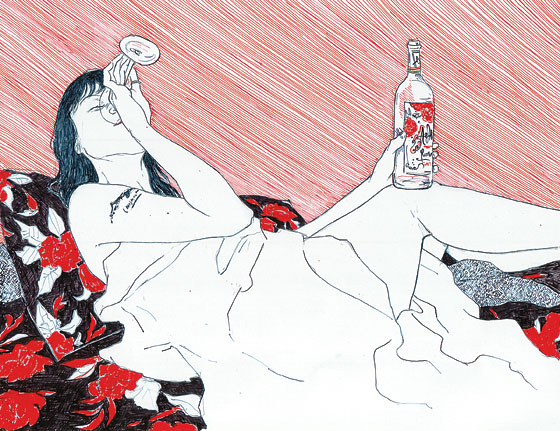 More women are drinking, and the women who drink are drinking more, in some cases matching their male peers. This is the kind of inequality nobody was fighting for. Alex Morris explores this in Gender Bender.
“You just adjust what you’re saying,” ... “Sometimes I’m like, I’m an alcoholic. Sometimes I’m like, I just drink a lot. Workaholic. Alcoholic. Workaholic. Alcoholic. How do you know if you have a problem?” She takes a sip and shrugs.
I don't have anything against women that drink. I fall into the demographic of women that drink and drink often. I barely drank in high school or college. I started drinking in my mid 20s and my tolerance has grown since then.
I started drinking as a way to socialize both in and out of the workplace after college. When I began to work long hours in a high pressure male-dominated environment, I started to drink more.
I drank in part because I was overworked and overstressed. When I'm short on personal time, I tend to party harder to compensate for my lack of free time. I loved the rush of working under intense pressure, drinking and partying until I was so tired my eyes couldn't stay open, forcing myself to get up after 3 hours of sleep, still hung over, only to repeat the process. Being that busy and exhausted allowed me to avoid thinking about how I didn't have a life besides work. I didn't have to reflect on whether I was "happy." The rush of always being on the go, of always being under pressure, of always being extremely busy, of always having yet another crisis to solve was addictive. I loved the sudden clearheadedness and certainty I had for every decision I made. It helped me feel like I (and my job) made a difference in the world.
Then again, I'm always at my best in emergencies and under extreme pressure. The more I'm overscheduled and stressed, the more I want to take on more both professionally and personally. If I worked 14 hour days, I'd start training for a marathon. If I worked 12 hour days and was training for a marathon, I'd start volunteering at a local elementary school once a week. If I worked 12 hour days, was training for a marathon, was already volunteering at an elementary school, I'd start swimming every other day just to see how far I could push my body. See the pattern? People (me) with personalities to tolerate extremes are attracted to jobs that demand those extremes. Short of doing drugs, which I have neither the interest or aptitude for, drinking heavily was the fastest and most socially acceptable way to burn the candle at both ends.
Then, there was the matter of gender and environment. In a male dominated environment, drinking was sometimes the only thing I had in common with my male counterparts. I had no interest in sport spreads, gambling or golf, and my co-workers could care less about windsurfing, sustainable agricultural practices or the latest Barbara Bui collection. So, we drank because that was the one way we could all show how big our BSDs were. Sometimes, I won. Sometimes, they won.
While the reasons I started drinking are similar to some of the reasons women drink in Morris' article, I wouldn't have kept drinking if I didn't like it. Fortunately for my liver, I no longer drink for any other reason than because I want to, and I try not to drink to excess. As Morris points out, there's nothing wrong with women that drink. It's just notable and somewhat unfortunate that women feel they need to drink in order to fit in with their male counterparts.
However, even without the pressure of fitting in with male counterparts, women have started drinking as much if not even more than males. Statistics have shown an increase of women that binge drink, which is unhealthy. But, while it's true that binge drinking isn't good for you, the general American definition of binge drinking for women is 4 or more alcoholic drinks in a row. Four (or more) drinks in a row seems like a normal night out with the girls, so perhaps I'm proving Morris' point. Which probably also explains why I don't think increased number of women drinkers is a big deal, although I do find Morris' article interesting.
Excerpts I found interesting:
That more women are drinking, yes—more than 48 percent acknowledge having had at least one drink in the past month (up from 42 percent in 1992). But beyond that, the women who drink are drinking more. The number of women who identify as moderate-to-heavy drinkers has risen in the last ten years, while the number of women who say they are light drinkers has declined. At the same time, men are reining in their drinking, meaning that the gender gap of alcohol consumption is narrowing all the time.
“As women ‘immigrated’ into the culture that was once unique to men...they picked up a lot of the same mores and attitudes and behaviors and ideas about what is socially acceptable that men had previously held. We call this acculturation—people adopt the drinking attitude and behaviors of the dominant culture.” Which explains why researchers have found that women in the demographic closest to being dominant (young, white, middle-class, educated) are leading the charge in terms of increased alcohol consumption.
The transition from high school to college marks the greatest increase in substance abuse among women, and the more educated a woman is, the more likely she will be to drink throughout her life. “College campuses are the place where drinking norms are set for educated individuals,” says Jon Morgenstern, a professor of psychiatry and vice-president at the National Center on Addiction and Substance Abuse. “The rate of drinking is astronomical. College is really a training ground for becoming an alcoholic.” And these days, the gender gap on campus is reversed: Fifty-five percent of college students who meet the clinical criteria for alcohol abuse are female.
The rate of frequent binge drinking increased by 124 percent between 1993 and 2001 at all-female colleges. When Amstel Light began marketing directly to women, its sales volume reportedly went up by 13 percent. Suddenly, alcohol commercials weren’t just of the big-breasted, mud-wrestling lineage. A Dewar’s ad from the era showed a lovely young woman donning her work clothes while a bare-chested man slept in the bed beside her. Tagline: “You finally have a real job, a real place, and a real boyfriend. How about a real drink?”
...Alcohol ads appeared during thirteen to fifteen of the most popular shows among teenagers and increasingly in women’s magazines, where according to Jernigan, in 2002 girls 12 to 20 saw 95 percent more ads for alcopops than women 21 and above. New alcopop flavors proliferated, Jell-O shooters showed up in grocery-store aisles, and companies rolled out vodkas in increasingly exotic flavors. “How many guys are going to drink a strawberry vodka?...There’s a clear effort by the industry to create products for female drinkers. And it has had an effect.”
Drinking has become entwined with progressive feminism. “I don’t think that the drinking in and of itself is feminist, but I do think that it comes from a feminist place, that it can bolster one’s sense of herself as liberated... You know, the whole point of Third Wave feminism is that individual choice should not be judged. If you choose to opt out and be a stay-at-home mom, then that’s your choice.” And if you choose to drink yourself unconscious in some random guy’s bed, that’s also your prerogative. To say that you shouldn’t would be paternalistic hand-wringing, implying that a woman needs to be protected from herself.
But the paradox of a woman exerting her power by making herself, to one degree or another, incapacitated does not read as a disjunction to most of the women I spoke with. On the contrary, a woman’s control over her life—and the decision of when and how to lose that control—seems to be the point.
14 December 2008
He said WHAT?
"I want to put this in that."
 That's what he said to me at the end of our date the other night.
A date that began with a dinner where I tried to order a salad as a starter.
He wanted us to share a starter and an entree, which I was happy to do.
I wanted the salad.
He "suggested" several times that I order the hummus or the chicken lettuce wraps instead because it was more value for the money (a salad was "just lettuce and croutons").
Unwilling to have to negotiate for my dinner, I decided if he didn't want me to order the salad, I'd just share the entree with him and forgo the starter. We ended up sharing a salad and entree for our dinner.
By the time the movie ended, it was late. He walked me home and wanted to come upstairs. I was tired and had an early day ahead of me, but he had tried SO hard to be sweet that night. After having known him for only three months, I knew it was difficult for him to part with money spent on someone other than himself. I let him up but warned him it was only for a few minutes because I really needed to go to sleep soon.
We sat on my couch, channel surfed the telly, talked and cuddled a bit. It was all very PG-13.
Despite his many personality traits that are incompatible with mine, he's smart and has interesting ideas. The conversation was good. His attempts to get me to lay down on the couch with him were not so great though.
He interrupted me mid-sentence and said, "I want to put this" (grabs his crotch) "in that" (pokes my crotch with his forefinger).
I kid you not. It really happened. The date was officially over.
 That's what he said to me at the end of our date the other night.
A date that began with a dinner where I tried to order a salad as a starter.
He wanted us to share a starter and an entree, which I was happy to do.
I wanted the salad.
He "suggested" several times that I order the hummus or the chicken lettuce wraps instead because it was more value for the money (a salad was "just lettuce and croutons").
Unwilling to have to negotiate for my dinner, I decided if he didn't want me to order the salad, I'd just share the entree with him and forgo the starter. We ended up sharing a salad and entree for our dinner.
By the time the movie ended, it was late. He walked me home and wanted to come upstairs. I was tired and had an early day ahead of me, but he had tried SO hard to be sweet that night. After having known him for only three months, I knew it was difficult for him to part with money spent on someone other than himself. I let him up but warned him it was only for a few minutes because I really needed to go to sleep soon.
We sat on my couch, channel surfed the telly, talked and cuddled a bit. It was all very PG-13.
Despite his many personality traits that are incompatible with mine, he's smart and has interesting ideas. The conversation was good. His attempts to get me to lay down on the couch with him were not so great though.
He interrupted me mid-sentence and said, "I want to put this" (grabs his crotch) "in that" (pokes my crotch with his forefinger).
I kid you not. It really happened. The date was officially over.
25 November 2008
Thank goodness for good friends!
In "Is Urban Loneliness a Myth?" Jennifer Senior explores living alone in the the Big Apple:
Manhattan is the capital of people living by themselves. But are New Yorkers lonelier? Far from it, say a new breed of loneliness researchers, who argue that urban alienation is largely a myth.

There are good public-health reasons to be concerned about loneliness. In the last couple of decades, researchers have started measuring the effects of social isolation, and they aren’t pretty. There’s been an avalanche of studies, for instance, showing that married people are happier and healthier, while the odds of dying increase significantly among the recently widowed, something known as the “widowhood effect.” There’s evidence suggesting that strong social networks help slow the progression of Alzheimer’s. There’s even better evidence suggesting that weak social networks pose as great a risk to heart-attack patients as obesity and hypertension. There’s also evidence to suggest that the religious people who live the longest are the ones who attend services most frequently rather than feel their beliefs most deeply. (It’s not faith that keeps them alive, in other words, but people.)
Studies show that loneliness is associated with morning surges in cortisol, the stress hormone, and increased vascular resistance, which results in higher blood pressure. They also show the lonely drink more, exercise less, get divorced more often, and have more family estrangements and run-ins with the neighbors. And they’re fatter. In one of my favorite experiments described in Loneliness, students were divided into two groups and told to evaluate … bite-size cookies. Specifically, researchers took aside each of the kids in one group and told them that no one wanted to work with them, so they’d have to work on their own. The others, by contrast, were each privately told that everyone wanted to work with them, but they’d still have to work on their own because it would be impossible to work with so many people. Then all of the participants were handed a plate of cookies and told to evaluate them. On average, the ones who had been told they were universally liked ate 4.5. Those who had been told they’d been universally rejected ate 9. “Is it any wonder we turn to ice cream,” the authors ask, “when we’re sitting at home feeling all alone in the world?”
Given how many New Yorkers live alone—in Manhattan, 25.6 percent of households are married, whereas the national average is 49.7—one would think we’d be at an increased risk for practically all these conditions. But Cacioppo points out that loneliness isn’t about objective matters, like whether we live alone. It’s about subjective matters, like whether we feel alone. To determine how satisfied people feel with their relationships, research psychologists generally rely on a twenty-question survey called the UCLA Loneliness Scale, which breaks down our connections into three groups: intimate (whether we have a partner), relational (friends), and collective (church, colleagues, baseball teams, etc.).
The results of these surveys have crucial—and positive—consequences for urban environments. Loneliness, it turns out, is relative. Widows are likely to feel better in a community with more widows (Boca Raton, Florida, say) than a community with only a few single elderly women. And singles are likely to feel better in a town with more singles … like New York. It’s true that marriage is still the best demographic predictor of loneliness. But Cacioppo stresses it’s a very loose predictor. People can have satisfying connections in other ways, after all, and people in bad marriages might as well be on their own: Cacioppo’s latest study, based on a sample of 225 people in the Chicago area, shows that those in unhappy marriages are no less lonely than single people, and might even be more so. Nor do rotten marriages do much for your health. A couple of years ago, Cacioppo teamed up with Linda Waite, co-author of The Case for Marriage: Why Married People Are Happier, Healthier, and Better Off Financially, whose conclusions about the health-positive effects of the institution drove feminists and fatalists like myself into a tizzy. They recruited a new pool of sample subjects and more or less asked the same questions Waite originally did, but also inserted questions to see if their participants were lonely. And what did they discover? That married people were indeed healthier—if they weren’t lonely in their marriages. If they were, the health benefits were so negligible the researchers considered them statistically insignificant.
“In our data,” adds Lisa Berkman, the Harvard epidemiologist who discovered the importance of social networks to heart patients, “friends substitute perfectly well for family.” This finding is important. It may be true that marriage prolongs life. But so, in Berkman’s view, does friendship—and considering how important friendship is to New Yorkers (home of Friends, after all), where so many of us live on our own, this finding is blissfully reassuring. In fact, Berkman has consistently found that living alone poses no health risk, whether she’s looking at 20,000 gas and electricity workers in France or a random sample of almost 7,000 men and women in Alameda, California, so long as her subjects have intimate ties of some kind as well as a variety of weaker ones. Those who are married but don’t have any civic ties or close friends or relatives, for instance, face greater health risks than those who live alone but have lots of friends and regularly volunteer at the local soup kitchen. “Any one connection doesn’t really protect you,” she says. “You need relationships that provide love and intimacy and you need relationships that help you feel like you’re participating in society in some way.”
read more digg story
Manhattan is the capital of people living by themselves. But are New Yorkers lonelier? Far from it, say a new breed of loneliness researchers, who argue that urban alienation is largely a myth.
There are good public-health reasons to be concerned about loneliness. In the last couple of decades, researchers have started measuring the effects of social isolation, and they aren’t pretty. There’s been an avalanche of studies, for instance, showing that married people are happier and healthier, while the odds of dying increase significantly among the recently widowed, something known as the “widowhood effect.” There’s evidence suggesting that strong social networks help slow the progression of Alzheimer’s. There’s even better evidence suggesting that weak social networks pose as great a risk to heart-attack patients as obesity and hypertension. There’s also evidence to suggest that the religious people who live the longest are the ones who attend services most frequently rather than feel their beliefs most deeply. (It’s not faith that keeps them alive, in other words, but people.)
Studies show that loneliness is associated with morning surges in cortisol, the stress hormone, and increased vascular resistance, which results in higher blood pressure. They also show the lonely drink more, exercise less, get divorced more often, and have more family estrangements and run-ins with the neighbors. And they’re fatter. In one of my favorite experiments described in Loneliness, students were divided into two groups and told to evaluate … bite-size cookies. Specifically, researchers took aside each of the kids in one group and told them that no one wanted to work with them, so they’d have to work on their own. The others, by contrast, were each privately told that everyone wanted to work with them, but they’d still have to work on their own because it would be impossible to work with so many people. Then all of the participants were handed a plate of cookies and told to evaluate them. On average, the ones who had been told they were universally liked ate 4.5. Those who had been told they’d been universally rejected ate 9. “Is it any wonder we turn to ice cream,” the authors ask, “when we’re sitting at home feeling all alone in the world?”
Given how many New Yorkers live alone—in Manhattan, 25.6 percent of households are married, whereas the national average is 49.7—one would think we’d be at an increased risk for practically all these conditions. But Cacioppo points out that loneliness isn’t about objective matters, like whether we live alone. It’s about subjective matters, like whether we feel alone. To determine how satisfied people feel with their relationships, research psychologists generally rely on a twenty-question survey called the UCLA Loneliness Scale, which breaks down our connections into three groups: intimate (whether we have a partner), relational (friends), and collective (church, colleagues, baseball teams, etc.).
The results of these surveys have crucial—and positive—consequences for urban environments. Loneliness, it turns out, is relative. Widows are likely to feel better in a community with more widows (Boca Raton, Florida, say) than a community with only a few single elderly women. And singles are likely to feel better in a town with more singles … like New York. It’s true that marriage is still the best demographic predictor of loneliness. But Cacioppo stresses it’s a very loose predictor. People can have satisfying connections in other ways, after all, and people in bad marriages might as well be on their own: Cacioppo’s latest study, based on a sample of 225 people in the Chicago area, shows that those in unhappy marriages are no less lonely than single people, and might even be more so. Nor do rotten marriages do much for your health. A couple of years ago, Cacioppo teamed up with Linda Waite, co-author of The Case for Marriage: Why Married People Are Happier, Healthier, and Better Off Financially, whose conclusions about the health-positive effects of the institution drove feminists and fatalists like myself into a tizzy. They recruited a new pool of sample subjects and more or less asked the same questions Waite originally did, but also inserted questions to see if their participants were lonely. And what did they discover? That married people were indeed healthier—if they weren’t lonely in their marriages. If they were, the health benefits were so negligible the researchers considered them statistically insignificant.
“In our data,” adds Lisa Berkman, the Harvard epidemiologist who discovered the importance of social networks to heart patients, “friends substitute perfectly well for family.” This finding is important. It may be true that marriage prolongs life. But so, in Berkman’s view, does friendship—and considering how important friendship is to New Yorkers (home of Friends, after all), where so many of us live on our own, this finding is blissfully reassuring. In fact, Berkman has consistently found that living alone poses no health risk, whether she’s looking at 20,000 gas and electricity workers in France or a random sample of almost 7,000 men and women in Alameda, California, so long as her subjects have intimate ties of some kind as well as a variety of weaker ones. Those who are married but don’t have any civic ties or close friends or relatives, for instance, face greater health risks than those who live alone but have lots of friends and regularly volunteer at the local soup kitchen. “Any one connection doesn’t really protect you,” she says. “You need relationships that provide love and intimacy and you need relationships that help you feel like you’re participating in society in some way.”
read more digg story
08 June 2008
I'm a type B person. Honest!
The Coffee Junkie’s Guide to Caffeine Addiction
 Because the drug is linked to the production of adrenaline and cortisol, hormones which are in turn associated with the fight-or-flight response, says Duke’s James Lane, “for someone with a busy, stressful job, little stresses elicit big responses on caffeine, and big stresses elicit huge responses.” Lane once did a study in which he compared caffeine’s effects on type-A versus type-B personalities. “Caffeine tended to make type Bs into type As,” he says. “Their blood pressure went up. They rose to challenges.” The type As didn’t get any more ambitious; they just became more excitable
read more
Photographs by Mitchell Feinberg. Food styling by Sara Jane.
Caffeine is the world’s most widely used psychoactive substance because it works, and quickly. Caffeine enters the bloodstream almost instantaneously upon ingestion. Within 30 to 45 minutes it has permeated nearly every cell in the body. Because it slips effortlessly across the blood-brain barrier—a sort of filter that prevents bacteria, viruses, and most drugs from entering the brain—it penetrates the cerebral cortex unimpeded. Once inside the central nervous system, caffeine is believed to plug up the receptors of adenosine, a neuromodulator that acts like a brake on nerve cells firing their messages across synapses. With the neural sluice gates open, more messages flood through, resulting, it’s said, in a sense of heightened mental quickness. “It makes people feel good, it increases their arousal and alertness, and makes them more friendly and sociable and talkative,” says Laura Juliano, an American University psychology professor, coffee researcher, and substance-dependence expert. Adenosine is also linked to the onset of sleep; rats injected with it have been observed to keel over unconscious, then wake up a few minutes later. When we pull a coffee-fueled all-nighter, “we’re blocking the adenosine telling us to go to sleep because we’re tired,” says James Lane, a professor of psychology at Duke University Medical Center who has been studying the effects of caffeine since the eighties. Caffeine also greatly aids physical endurance and athletic performance, allowing one to go longer and stronger to such an extent that the International Olympic Committee once limited its use as a performance enhancer, though it lifted the restriction in 2004.
Caffeine is classified pharmacologically as a stimulant, a cousin of cocaine and amphetamines, including Adderall and other substances in the increasingly popular cognitive-improvement prescription-drug toolbox. ... The difference between caffeine and other stimulants is, in part, a matter of degree. Like its pharmacological cousins, caffeine signals the body to release adrenaline (hence the heightened sense of energy). Caffeine also slightly raises levels of dopamine, the brain’s feel-good hormone. Cocaine and amphetamines essentially do the same thing, only they create not just a pleasant feeling but outright euphoria. Methamphetamine and crack, because they’re highly concentrated, create an even more intense feeling. But the higher a drug’s highs, the lower its lows, which is why a crack user needing a fix might rob an elderly neighbor at gunpoint while a coffee drinker might simply get snippy with co-workers.
... a more substantive difference between caffeine and related stimulants. Because the brain develops a tolerance to all of these drugs, ever-increasing quantities are required to achieve the same high. What makes caffeine more desirable, or less potentially dangerous, than other stimulants is its built-in restraining mechanism. Technically called caffeinism, it’s the state in which an overcaffeinated user hits the drug’s “dysphoric” range and is overcome by the shakes, anxiety, tension, and nausea. Caffeine, that is, is self-regulating. “That’s one of the secrets of caffeine and probably why it’s accepted worldwide,” says Roland Griffiths, professor of psychiatry and neuroscience at Johns Hopkins and the unofficial dean of caffeine researchers. “With cocaine and amphetamines, when you increase the doses, you generally get increased stimulation and well-being.” Too much cocaine makes you feel invincible; too much coffee makes you think you’re having a nervous breakdown.
Studies touting newly discovered benefits of coffee and caffeine are published every few weeks. (April 8, 2008, bulletin: Caffeine may help prevent autoimmune diseases such as multiple sclerosis.) Drinking moderate amounts of coffee is believed to slash rates of Parkinson’s disease, inhibit the formation of gallstones, and ward off cirrhosis. It may help prevent Alzheimer’s. Caffeine relieves asthma symptoms by acting as a bronchodilator. Researchers who fed mice caffeinated water found that the animals were less likely to develop skin cancer... One large-scale study showed that a person’s suicide risk decreased with each cup of coffee consumed per day, up to seven cups (notably, though, eight cups or more was shown in a separate study to increase the risk substantially). Caffeine is probably not as bad a diuretic as it’s reputed to be; many nutritionists now believe that a cup of coffee hydrates people about as well as a cup of water... Another study showed that a serving of coffee has more antioxidants than a serving of either grape juice or blueberries.
... And now the bad. A study published earlier this year demonstrated that pregnant women who consume 200 milligrams of caffeine or more per day (that’s less than one Tall Starbucks drip coffee or three six-ounce cups of traditional coffee) are more than twice as likely to have a miscarriage as those who don’t use any. Too much caffeine during gestation may also contribute to low birth weights in children and result in babies born with a caffeine dependence. Large daily doses may also be a factor in female infertility. A study released in late May found that drinking coffee before breakfast could cause blood-glucose levels to rise sharply, which can be dangerous for people with type 2 diabetes. Drinking large amounts of caffeine has been found to exacerbate osteoporosis. And despite the popular idea that caffeine can relieve migraines, doctors say it more often causes them (Caffeine withdrawal seems to be the trigger).
The most serious negative effects of hypercaffeination involve stress and sleeplessness. Because the drug is linked to the production of adrenaline and cortisol, hormones which are in turn associated with the fight-or-flight response, says Duke’s James Lane, “for someone with a busy, stressful job, little stresses elicit big responses on caffeine, and big stresses elicit huge responses.” Lane once did a study in which he compared caffeine’s effects on type-A versus type-B personalities. “Caffeine tended to make type Bs into type As,” he says. “Their blood pressure went up. They rose to challenges.” The type As didn’t get any more ambitious; they just became more excitable. Stress has been linked to everything from cancer to sexual dysfunction to depression. Before she prescribes an antianxiety drug like Xanax, Juliano advises her patients to quit coffee.
 Because the drug is linked to the production of adrenaline and cortisol, hormones which are in turn associated with the fight-or-flight response, says Duke’s James Lane, “for someone with a busy, stressful job, little stresses elicit big responses on caffeine, and big stresses elicit huge responses.” Lane once did a study in which he compared caffeine’s effects on type-A versus type-B personalities. “Caffeine tended to make type Bs into type As,” he says. “Their blood pressure went up. They rose to challenges.” The type As didn’t get any more ambitious; they just became more excitable
read more
Photographs by Mitchell Feinberg. Food styling by Sara Jane.
Caffeine is the world’s most widely used psychoactive substance because it works, and quickly. Caffeine enters the bloodstream almost instantaneously upon ingestion. Within 30 to 45 minutes it has permeated nearly every cell in the body. Because it slips effortlessly across the blood-brain barrier—a sort of filter that prevents bacteria, viruses, and most drugs from entering the brain—it penetrates the cerebral cortex unimpeded. Once inside the central nervous system, caffeine is believed to plug up the receptors of adenosine, a neuromodulator that acts like a brake on nerve cells firing their messages across synapses. With the neural sluice gates open, more messages flood through, resulting, it’s said, in a sense of heightened mental quickness. “It makes people feel good, it increases their arousal and alertness, and makes them more friendly and sociable and talkative,” says Laura Juliano, an American University psychology professor, coffee researcher, and substance-dependence expert. Adenosine is also linked to the onset of sleep; rats injected with it have been observed to keel over unconscious, then wake up a few minutes later. When we pull a coffee-fueled all-nighter, “we’re blocking the adenosine telling us to go to sleep because we’re tired,” says James Lane, a professor of psychology at Duke University Medical Center who has been studying the effects of caffeine since the eighties. Caffeine also greatly aids physical endurance and athletic performance, allowing one to go longer and stronger to such an extent that the International Olympic Committee once limited its use as a performance enhancer, though it lifted the restriction in 2004.
Caffeine is classified pharmacologically as a stimulant, a cousin of cocaine and amphetamines, including Adderall and other substances in the increasingly popular cognitive-improvement prescription-drug toolbox. ... The difference between caffeine and other stimulants is, in part, a matter of degree. Like its pharmacological cousins, caffeine signals the body to release adrenaline (hence the heightened sense of energy). Caffeine also slightly raises levels of dopamine, the brain’s feel-good hormone. Cocaine and amphetamines essentially do the same thing, only they create not just a pleasant feeling but outright euphoria. Methamphetamine and crack, because they’re highly concentrated, create an even more intense feeling. But the higher a drug’s highs, the lower its lows, which is why a crack user needing a fix might rob an elderly neighbor at gunpoint while a coffee drinker might simply get snippy with co-workers.
... a more substantive difference between caffeine and related stimulants. Because the brain develops a tolerance to all of these drugs, ever-increasing quantities are required to achieve the same high. What makes caffeine more desirable, or less potentially dangerous, than other stimulants is its built-in restraining mechanism. Technically called caffeinism, it’s the state in which an overcaffeinated user hits the drug’s “dysphoric” range and is overcome by the shakes, anxiety, tension, and nausea. Caffeine, that is, is self-regulating. “That’s one of the secrets of caffeine and probably why it’s accepted worldwide,” says Roland Griffiths, professor of psychiatry and neuroscience at Johns Hopkins and the unofficial dean of caffeine researchers. “With cocaine and amphetamines, when you increase the doses, you generally get increased stimulation and well-being.” Too much cocaine makes you feel invincible; too much coffee makes you think you’re having a nervous breakdown.
Studies touting newly discovered benefits of coffee and caffeine are published every few weeks. (April 8, 2008, bulletin: Caffeine may help prevent autoimmune diseases such as multiple sclerosis.) Drinking moderate amounts of coffee is believed to slash rates of Parkinson’s disease, inhibit the formation of gallstones, and ward off cirrhosis. It may help prevent Alzheimer’s. Caffeine relieves asthma symptoms by acting as a bronchodilator. Researchers who fed mice caffeinated water found that the animals were less likely to develop skin cancer... One large-scale study showed that a person’s suicide risk decreased with each cup of coffee consumed per day, up to seven cups (notably, though, eight cups or more was shown in a separate study to increase the risk substantially). Caffeine is probably not as bad a diuretic as it’s reputed to be; many nutritionists now believe that a cup of coffee hydrates people about as well as a cup of water... Another study showed that a serving of coffee has more antioxidants than a serving of either grape juice or blueberries.
... And now the bad. A study published earlier this year demonstrated that pregnant women who consume 200 milligrams of caffeine or more per day (that’s less than one Tall Starbucks drip coffee or three six-ounce cups of traditional coffee) are more than twice as likely to have a miscarriage as those who don’t use any. Too much caffeine during gestation may also contribute to low birth weights in children and result in babies born with a caffeine dependence. Large daily doses may also be a factor in female infertility. A study released in late May found that drinking coffee before breakfast could cause blood-glucose levels to rise sharply, which can be dangerous for people with type 2 diabetes. Drinking large amounts of caffeine has been found to exacerbate osteoporosis. And despite the popular idea that caffeine can relieve migraines, doctors say it more often causes them (Caffeine withdrawal seems to be the trigger).
The most serious negative effects of hypercaffeination involve stress and sleeplessness. Because the drug is linked to the production of adrenaline and cortisol, hormones which are in turn associated with the fight-or-flight response, says Duke’s James Lane, “for someone with a busy, stressful job, little stresses elicit big responses on caffeine, and big stresses elicit huge responses.” Lane once did a study in which he compared caffeine’s effects on type-A versus type-B personalities. “Caffeine tended to make type Bs into type As,” he says. “Their blood pressure went up. They rose to challenges.” The type As didn’t get any more ambitious; they just became more excitable. Stress has been linked to everything from cancer to sexual dysfunction to depression. Before she prescribes an antianxiety drug like Xanax, Juliano advises her patients to quit coffee.
22 April 2008
Women, Repeat This: Don’t Ask, Don’t Get
From the New York Times, by LINDA BABCOCK
Published: April 6, 2008
ABOUT 10 years ago, I heard that my boss was recommending two of my male colleagues for promotion. Both of these men had joined the faculty the same year I was hired, both were good teachers, and both had published important research. They were certainly qualified to move to the next level, from associate professor to full professor.
But so was I. I figured it was just a matter of time before my boss stopped by my office with the good news that he was promoting me, too. So I waited. And waited. As time passed, it became clear that I might be waiting a very long time.
Finally, I worked up the nerve to talk to him about it. I vividly remember his reaction. A big smile spread across his face. “Well, let’s promote you, too!” he said.
When my two male colleagues had asked to be promoted, my boss, seeing that they met all the requirements, readily agreed. Since he was a busy man, he didn’t stop to think about who else was ready for promotion. A question was posed, he answered it, and he went on to the next problem.
About three years later, I held my boss’s job. While hiring two people with similar credentials, a woman and a man, I made each the same salary offer. The woman accepted the offer without negotiating. The man bargained hard, and I had to raise his offer by about 10 percent before he would agree to it.
In between these two events, I watched similar situations play out among my students and friends. Time and again, I saw women accept the status quo, take what they were offered and wait for someone else to decide what they deserved. Men asked for what they wanted and usually got what they asked for.
Prompted by these experiences, I started a research project with several colleagues to study how and when men and women initiate negotiations. In my book “Women Don’t Ask,” I laid out overwhelming evidence that women are much less likely than men to use negotiation to promote their goals and wishes.
With my co-author, Sara Laschever, I also showed that this problem extends into most realms of a woman’s life, hampering her success not just at work but also at home and in her dealings with everyone else in her world: contractors, retailers, service providers, family members, even friends.
I also found strong evidence that this reluctance to promote their own interests is not an innate quality or a genetic blind spot in women. As a society, we teach little girls (and I have a little girl, so I see this all the time) that it’s not nice or feminine or appropriate for them to focus on what they want and pursue their self-interest — and we don’t like it when they do.
The messages girls receive — from parents and teachers, from books they read, from movies and television shows they watch, and from behavior of the adults around them — can be so powerful that as women they may not even understand that their reluctance to ask for what they want is a learned behavior, and one that can be unlearned.
More recent research that I conducted with two colleagues, Hannah Bowles and Lei Lai, points to another reason that women don’t ask: They face a much chillier reaction — from men and from women — when they do negotiate for what they want.
Behavior that can lead a man to be seen as ambitious or a go-getter can brand a woman as too pushy and aggressive. She may be called rude names, receive negative evaluations based solely on her personal style instead of her work and find herself closed out of networks or opportunities from which she might benefit. My boss was pleased that I asked him for what I wanted. A lot of women aren’t so lucky.
I’ve concluded that this is a crucial leadership issue for any organization committed to sound management practices. When I realized that the woman I’d hired would be earning less than the man for doing equivalent work, I called her back and raised her salary. I couldn’t accept this disparity in my organization — not just because it was unfair but because I knew that it was bad for my organization, where it is crucial to attract and keep the best people.
Managers often watch talented women walk out the door when they discover that they’ve been treated inequitably. So good managers need to be on the lookout for these sorts of inequities and take steps to correct them.
THERE’S a lot that women can do, too. They can recognize more opportunities to negotiate and master basic negotiation skills. They can learn how to assess and strengthen their bargaining power; research, prepare and practice before their negotiations; and use strategies that won’t make them seem threatening and provoke a backlash.
I’ve also founded an organization, Progress (heinz.cmu.edu/progress), to teach young girls to negotiate. In partnership with the Girl Scouts, we’ve already developed a negotiation badge that takes girls through a series of 10 activities to develop their negotiation skills. We’ve created a video game that requires girls to negotiate in order to reach the highest levels and win.
We may not consciously realize that we’re tougher on assertive women than we are on men who behave in similar ways. But we need to be diligent on this score.
So the next time you react negatively to the behavior of a strong woman, stop yourself and say instead, “I’m glad she’s going after what she wants.”
Linda Babcock is James M. Walton professor of economics at the Heinz School at Carnegie Mellon University and the author, with Sara Laschever, of “Ask for It” (Bantam Books).
Published: April 6, 2008
ABOUT 10 years ago, I heard that my boss was recommending two of my male colleagues for promotion. Both of these men had joined the faculty the same year I was hired, both were good teachers, and both had published important research. They were certainly qualified to move to the next level, from associate professor to full professor.
But so was I. I figured it was just a matter of time before my boss stopped by my office with the good news that he was promoting me, too. So I waited. And waited. As time passed, it became clear that I might be waiting a very long time.
Finally, I worked up the nerve to talk to him about it. I vividly remember his reaction. A big smile spread across his face. “Well, let’s promote you, too!” he said.
When my two male colleagues had asked to be promoted, my boss, seeing that they met all the requirements, readily agreed. Since he was a busy man, he didn’t stop to think about who else was ready for promotion. A question was posed, he answered it, and he went on to the next problem.
About three years later, I held my boss’s job. While hiring two people with similar credentials, a woman and a man, I made each the same salary offer. The woman accepted the offer without negotiating. The man bargained hard, and I had to raise his offer by about 10 percent before he would agree to it.
In between these two events, I watched similar situations play out among my students and friends. Time and again, I saw women accept the status quo, take what they were offered and wait for someone else to decide what they deserved. Men asked for what they wanted and usually got what they asked for.
Prompted by these experiences, I started a research project with several colleagues to study how and when men and women initiate negotiations. In my book “Women Don’t Ask,” I laid out overwhelming evidence that women are much less likely than men to use negotiation to promote their goals and wishes.
With my co-author, Sara Laschever, I also showed that this problem extends into most realms of a woman’s life, hampering her success not just at work but also at home and in her dealings with everyone else in her world: contractors, retailers, service providers, family members, even friends.
I also found strong evidence that this reluctance to promote their own interests is not an innate quality or a genetic blind spot in women. As a society, we teach little girls (and I have a little girl, so I see this all the time) that it’s not nice or feminine or appropriate for them to focus on what they want and pursue their self-interest — and we don’t like it when they do.
The messages girls receive — from parents and teachers, from books they read, from movies and television shows they watch, and from behavior of the adults around them — can be so powerful that as women they may not even understand that their reluctance to ask for what they want is a learned behavior, and one that can be unlearned.
More recent research that I conducted with two colleagues, Hannah Bowles and Lei Lai, points to another reason that women don’t ask: They face a much chillier reaction — from men and from women — when they do negotiate for what they want.
Behavior that can lead a man to be seen as ambitious or a go-getter can brand a woman as too pushy and aggressive. She may be called rude names, receive negative evaluations based solely on her personal style instead of her work and find herself closed out of networks or opportunities from which she might benefit. My boss was pleased that I asked him for what I wanted. A lot of women aren’t so lucky.
I’ve concluded that this is a crucial leadership issue for any organization committed to sound management practices. When I realized that the woman I’d hired would be earning less than the man for doing equivalent work, I called her back and raised her salary. I couldn’t accept this disparity in my organization — not just because it was unfair but because I knew that it was bad for my organization, where it is crucial to attract and keep the best people.
Managers often watch talented women walk out the door when they discover that they’ve been treated inequitably. So good managers need to be on the lookout for these sorts of inequities and take steps to correct them.
THERE’S a lot that women can do, too. They can recognize more opportunities to negotiate and master basic negotiation skills. They can learn how to assess and strengthen their bargaining power; research, prepare and practice before their negotiations; and use strategies that won’t make them seem threatening and provoke a backlash.
I’ve also founded an organization, Progress (heinz.cmu.edu/progress), to teach young girls to negotiate. In partnership with the Girl Scouts, we’ve already developed a negotiation badge that takes girls through a series of 10 activities to develop their negotiation skills. We’ve created a video game that requires girls to negotiate in order to reach the highest levels and win.
We may not consciously realize that we’re tougher on assertive women than we are on men who behave in similar ways. But we need to be diligent on this score.
So the next time you react negatively to the behavior of a strong woman, stop yourself and say instead, “I’m glad she’s going after what she wants.”
Linda Babcock is James M. Walton professor of economics at the Heinz School at Carnegie Mellon University and the author, with Sara Laschever, of “Ask for It” (Bantam Books).
02 February 2007
He said what?
It's the day before I leave for a week long vacation in Bonaire, and I've just switched on my "Out of Office" notice when I receive a phone call. I answer it the way I normally do at work: no frills, no "hello" or "how are you." I state the name of the firm for which I work. Usually, the person that's calling will tell me who he is or assume I can recognize him by voice and launch into a conversation about whatever issue is at hand. In this instance, the person on the other line sounds taken aback by my phone etiquette and hesitantly asks for me by name.
"Speaking," I reply. The caller isn't a client. He's an acquaintance whose social circle occasionally overlaps the peripheries of mine; a friend of a friend. For simplicity's sake, I'll call him "J." J has a question, and I jokingly feign an unwillingness to cooperate, "Question? I don't know... It'll cost ya'." Most people I know (clients included) understand this as an invitation to shoot the breeze. J does not, as he seems somewhat stumped at my response.
Then I remember that this is the same person that once diagnosed me with "low self-esteem" because I sarcastically referred to myself as "a monkey that pushes buttons," reprimanded me for "being down on yourself" when I commented on my poor English after telling of my immigrant beginnings in small-town South Carolina and told me that I must never again utter the word "irregardless" irregardless of the fact that I purposely use it because it is a fake word that many people -- Homer Simpson (yes, I realize he is not a real person), George W Bush, and average joe-schmoe -- do think is a real word.
After having hung out with him a few times, I realized that he couldn't relate to my brand of deadpan sarcasm. Nor would he ever understand that the words "low" and "self-esteem" spoken or written in close proximity have the odd effect of making me want to connect my thumbs together with both index fingers extended into a huge WHATEVER as I roll my eyes and try not to gag. As if. Then again, I'm certain I would never understand or relate to him at that level either, as he once told me that he had, and I quote, "a great sense of humor." Strange, but for as long as I've known him (in all fairness, a few months), there was nothing he said or did that I found close to mildly amusing.
Socially, we related by talking about "deep" and "meaningful" things like political or economic philosophy, his love of trains/ferries/bridges/New York, relationships, our jobs and how much we love or hate them, yada yada. Hey, I can sit around and shoot the I-don't-watch-television-and-only-read-the-New-York-Times-and-New-Yorker intellectual angst (or snobbery depending on your viewpoint) as much as the next new-england-liberal-arts-educated-double-major-in-government-and-economics-with-a-minor-in-international-affairs-and-an-somewhat-academic-focus-on-political-and-economic-theory-slash-philosophy-that-graduated-cum-laude-with-a-bachelor-of-arts-in-bullshit, but I'll admit that I find it boring and exhausting to be "deep." It's hard to explain, but it's the same reason why I decided not to become an English major: too much drama.
I'll even be the first to point out that I'm shallow and superficial. While there's a time and place for everything and it's good to think about big picture issues, I don't always want to sit around thinking and talking about the meaning of life, etc. Things happen and life goes on no matter what. Shit happens to everyone, and most of the time, there isn't a reason why, no greater purpose or deeper meaning. There is nothing to be gained by trying to find meaning where there isn't any or by over thinking or over analyzing a situation. If time is going to be spent talking about those issues, then it's equally important to spend time talking about practical solutions. Otherwise, I'd rather spend my time with friends and family, hearing or telling amusing stories, talking about this week's episode of Heroes or Gray's Anatomy, eating or going drinking. Besides, if I have issues or concerns, I'd share them with my close friends (yeah, you) -- people that understand my sense of humor and sarcasm even if they can't always tell if I'm joking or not.
I prod him to get to the point, "Okay, J. What's the question?"
"Well, I...uh...heard that [insert my firm's name here] and [insert the name of one of my firm's competitors] have come out with...uh...research showing [potentially confidential client information]. We, [the firm where J works], hear that a lot of your clients are mad about this and are pulling their business." I realize that this is not a friendly hope-you-have-a-great-vacation call. J happens to be a reporter for a major news agency.
Um, wow. What the fuck? Then, I do what I always do when I'm mad -- I become extremely polite but distant. I refuse to cooperate. I mean, I understand what J is asking, but if the man is going to ask a question, he should at least have some balls and ask the question, "Gee, doesn't sound like a question at all. Sounds more like a statement to me."
The conversation lapses into an awkward silence for a few seconds. I am very comfortable in uncomfortable silences, especially when I'm pissed. More hemming and hawing before J says, "Well, I guess...uh...I was...um...wondering what your thoughts are on that."
"You should know better than to call me about this." In my line of business, protecting the firm's reputation and client confidentiality is a HUGE deal. And, this isn't just specific to my industry; it's a big deal everywhere in corporate America. The fact that a reporter is calling me for information or a comment about something he views to be controversial could be grounds for my dismal. If anything I say ends up in the news, I would lose my job even if it were said in passing, taken out of context, or merely overheard on the subway.
"Well, I'm a reporter, so I have to do my duty and cover all sources," he responds.
Every reporter knows that my firm has a press office that handles all press inquiries, and none of them should ever call employees outside that office for comments. I say as much,"If you are doing your job as a reporter, you should call the press office."
"Yeah, but they wouldn't have told me anything anyway, so why bother." Oh, the official press office won't comment, so he thinks I will instead. If I had doubts before, I certainly don't now. He's an asshole, and this could cost me my job.
In a saccharine sweet voice, I ask, "Can you do me a favor? Can you please throw away my business card?" B has observed that I never raise my voice. When I am angry or annoyed, my voice becomes cute, soft and dangerously sweet; since I am none of those adjectives, it serves the same purpose as if I were to throw a screaming fit.
"You never gave me your business card." As always, the sarcasm is lost on J, but this time he's just playing dumb.
"Well, how did you get this number?" I ask, voice like molasses.
"I took it off your email signature."
"Oh, then please get rid of all my contact information." He treats my response like a joke, but it isn't, and I tell him as much. What I really want to say, and what I really think is DON'T EVER FUCKING CALL ME AGAIN AT WORK YOU ASSHOLE.
The conversation has deteriorated, and my hostile tone becomes evident to even the most obtuse. J tries to salvage the conversation by turning it into a social call, "So, you're leaving tomorrow for Bonaire? I'll talk to you when you get back." In case I hadn't made it clear before, the guy's an asshole.
"Bye," I say and hang up.
There you have it. Another episode of "He said what?" Can you believe it?!?
"Speaking," I reply. The caller isn't a client. He's an acquaintance whose social circle occasionally overlaps the peripheries of mine; a friend of a friend. For simplicity's sake, I'll call him "J." J has a question, and I jokingly feign an unwillingness to cooperate, "Question? I don't know... It'll cost ya'." Most people I know (clients included) understand this as an invitation to shoot the breeze. J does not, as he seems somewhat stumped at my response.
Then I remember that this is the same person that once diagnosed me with "low self-esteem" because I sarcastically referred to myself as "a monkey that pushes buttons," reprimanded me for "being down on yourself" when I commented on my poor English after telling of my immigrant beginnings in small-town South Carolina and told me that I must never again utter the word "irregardless" irregardless of the fact that I purposely use it because it is a fake word that many people -- Homer Simpson (yes, I realize he is not a real person), George W Bush, and average joe-schmoe -- do think is a real word.
After having hung out with him a few times, I realized that he couldn't relate to my brand of deadpan sarcasm. Nor would he ever understand that the words "low" and "self-esteem" spoken or written in close proximity have the odd effect of making me want to connect my thumbs together with both index fingers extended into a huge WHATEVER as I roll my eyes and try not to gag. As if. Then again, I'm certain I would never understand or relate to him at that level either, as he once told me that he had, and I quote, "a great sense of humor." Strange, but for as long as I've known him (in all fairness, a few months), there was nothing he said or did that I found close to mildly amusing.
Socially, we related by talking about "deep" and "meaningful" things like political or economic philosophy, his love of trains/ferries/bridges/New York, relationships, our jobs and how much we love or hate them, yada yada. Hey, I can sit around and shoot the I-don't-watch-television-and-only-read-the-New-York-Times-and-New-Yorker intellectual angst (or snobbery depending on your viewpoint) as much as the next new-england-liberal-arts-educated-double-major-in-government-and-economics-with-a-minor-in-international-affairs-and-an-somewhat-academic-focus-on-political-and-economic-theory-slash-philosophy-that-graduated-cum-laude-with-a-bachelor-of-arts-in-bullshit, but I'll admit that I find it boring and exhausting to be "deep." It's hard to explain, but it's the same reason why I decided not to become an English major: too much drama.
I'll even be the first to point out that I'm shallow and superficial. While there's a time and place for everything and it's good to think about big picture issues, I don't always want to sit around thinking and talking about the meaning of life, etc. Things happen and life goes on no matter what. Shit happens to everyone, and most of the time, there isn't a reason why, no greater purpose or deeper meaning. There is nothing to be gained by trying to find meaning where there isn't any or by over thinking or over analyzing a situation. If time is going to be spent talking about those issues, then it's equally important to spend time talking about practical solutions. Otherwise, I'd rather spend my time with friends and family, hearing or telling amusing stories, talking about this week's episode of Heroes or Gray's Anatomy, eating or going drinking. Besides, if I have issues or concerns, I'd share them with my close friends (yeah, you) -- people that understand my sense of humor and sarcasm even if they can't always tell if I'm joking or not.
I prod him to get to the point, "Okay, J. What's the question?"
"Well, I...uh...heard that [insert my firm's name here] and [insert the name of one of my firm's competitors] have come out with...uh...research showing [potentially confidential client information]. We, [the firm where J works], hear that a lot of your clients are mad about this and are pulling their business." I realize that this is not a friendly hope-you-have-a-great-vacation call. J happens to be a reporter for a major news agency.
Um, wow. What the fuck? Then, I do what I always do when I'm mad -- I become extremely polite but distant. I refuse to cooperate. I mean, I understand what J is asking, but if the man is going to ask a question, he should at least have some balls and ask the question, "Gee, doesn't sound like a question at all. Sounds more like a statement to me."
The conversation lapses into an awkward silence for a few seconds. I am very comfortable in uncomfortable silences, especially when I'm pissed. More hemming and hawing before J says, "Well, I guess...uh...I was...um...wondering what your thoughts are on that."
"You should know better than to call me about this." In my line of business, protecting the firm's reputation and client confidentiality is a HUGE deal. And, this isn't just specific to my industry; it's a big deal everywhere in corporate America. The fact that a reporter is calling me for information or a comment about something he views to be controversial could be grounds for my dismal. If anything I say ends up in the news, I would lose my job even if it were said in passing, taken out of context, or merely overheard on the subway.
"Well, I'm a reporter, so I have to do my duty and cover all sources," he responds.
Every reporter knows that my firm has a press office that handles all press inquiries, and none of them should ever call employees outside that office for comments. I say as much,"If you are doing your job as a reporter, you should call the press office."
"Yeah, but they wouldn't have told me anything anyway, so why bother." Oh, the official press office won't comment, so he thinks I will instead. If I had doubts before, I certainly don't now. He's an asshole, and this could cost me my job.
In a saccharine sweet voice, I ask, "Can you do me a favor? Can you please throw away my business card?" B has observed that I never raise my voice. When I am angry or annoyed, my voice becomes cute, soft and dangerously sweet; since I am none of those adjectives, it serves the same purpose as if I were to throw a screaming fit.
"You never gave me your business card." As always, the sarcasm is lost on J, but this time he's just playing dumb.
"Well, how did you get this number?" I ask, voice like molasses.
"I took it off your email signature."
"Oh, then please get rid of all my contact information." He treats my response like a joke, but it isn't, and I tell him as much. What I really want to say, and what I really think is DON'T EVER FUCKING CALL ME AGAIN AT WORK YOU ASSHOLE.
The conversation has deteriorated, and my hostile tone becomes evident to even the most obtuse. J tries to salvage the conversation by turning it into a social call, "So, you're leaving tomorrow for Bonaire? I'll talk to you when you get back." In case I hadn't made it clear before, the guy's an asshole.
"Bye," I say and hang up.
There you have it. Another episode of "He said what?" Can you believe it?!?
Subscribe to:
Posts (Atom)


