Showing posts with label why i love new york. Show all posts
Showing posts with label why i love new york. Show all posts
21 August 2009


20 May 2009
Please, just roll me back home
 I met a former coworker for lunch today at David Chang's Momofuku Ssam Bar.
I don't even want to talk about the food, because it was too good for me to put into words. Let me just say I love chefs that love pork and offal. I love restaurants that specifically state on the menu, "We do not serve vegetarian-friendly items."
My friend and I both had the prix fixe, where we ordered different items and shared everything. As a take-small-bites-and-taste-everything-at-least-once eater, I like eating with people who can share.
My faves: Pork Buns, Blondie Pie
Afterwards, my friend and I went next door to the Milk Bar where I checked out the Marshmallow Cookie (it was ok), the Chocolate Cake, and the Banana Cake. I've decided that I like my cakes and cookies better when they're slightly warm.
19 May 2009
He said WHAT?
At Trader Joe's this morning:
Man: "How are you today?"
Me: "Ok."
Man: "Just ok?" I shrugged. He said, "Yeah, me too. What are your plans for the rest of today?"
Me: "Eh, look for work? Run errands? Not sure yet. It's nice out."
Man: "What do you want to do?"
Me: "I wish I knew. Suggestions?"
Man: "You look like a swimmer. Maybe you can be a lifeguard."
Man: "How are you today?"
Me: "Ok."
Man: "Just ok?" I shrugged. He said, "Yeah, me too. What are your plans for the rest of today?"
Me: "Eh, look for work? Run errands? Not sure yet. It's nice out."
Man: "What do you want to do?"
Me: "I wish I knew. Suggestions?"
Man: "You look like a swimmer. Maybe you can be a lifeguard."
08 May 2009
Right in my own back yard...
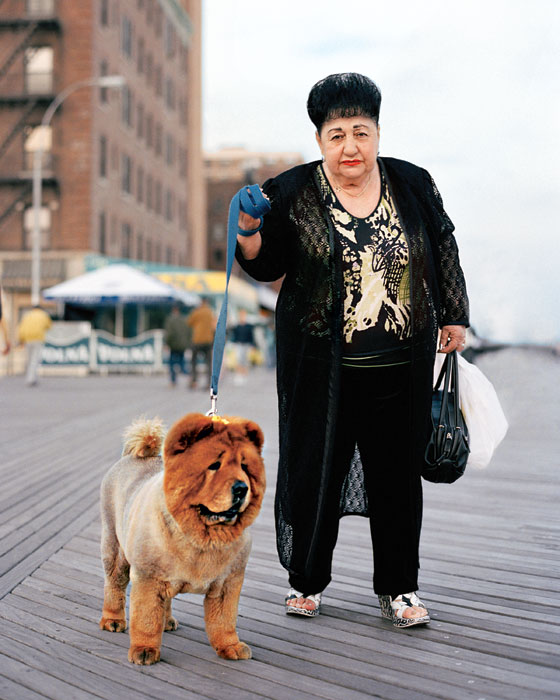 The biggest mistake one can make upon exiting the B at the last stop, inhaling undertow-flavored air and narrowly passing a man in a fake Gucci shirt and a rabbit hat hawking caviar from a foldable outdoor table, is to assume that you’re seeing a passable facsimile of Russia. Brighton Beach is far more interesting. What you’re actually getting is a kind of double-blind guess— a Jewish immigrant’s idea of what an American’s idea of Russia may be. And that’s what makes it arguably the most fascinating ethnic enclave in New York: It looks just as exotic to the ethnicity it enclaves.
 Like its freak cousin Coney Island, the neighborhood known as Little Odessa is as much a state of mind as a location: stuck between two worlds, with its own culture, slang, radio, TV, magazines, and illicit pharmaceutical industry (think less meth and more FDA-unapproved heart drops). It’s too singular and ornery to be a true tourist trap. Unlike Little Italy, with its defanged Mafia lore, Brighton Beach frowns at suggestions the “Russian mob” has ever even existed; its secrets are still secrets, and its past is never far away.
http://nymag.com/guides/everything/brighton-beach/
Welcome to the jungle...
NYC used to be fun and games of another sort. This is what Manhattan used to look like before white people showed up...
http://digg.com/d1tJFy
06 March 2009
Why I live above the Mason Dixon line

I think I've been living in NYC too long. I thought the people in the following exchange were being ironic and sarcastic:
Jami: Hi Amy...I have enjoyed reading your profile and looking at your pics. When did you get saved? I can see you love the Lord and I'm sooo happy for you. God bless!
Amy: Hi Jami. The Lord is my Rock and my Redeemer. Girl, I was saved in the 5th grade at a Baptist Revival and baptized in Deep Creek in the middle of January! It was just awesome. I've only learned in the last 5 years what it really means to live for Him! My life is so blessed as a result! God is good, all the time!
And then, I realized that the exchange was sincere. It was between two of B's old grade school friends from Lake City, FL. Thanks to the miracle of Facebook, B and I are reminded of why we live above the Mason Dixon line.
08 February 2009
Goodbye Silver Fox
Goodbye Silver Fox. Here's why things will never work for us:
1. I eventually figured out that you are close to 20 years my senior, and when I jokingly mentioned you were twice my age, you got offended. Let's call things as they are and admit that you are not as young as like to pretend, and you are not good at pretending.
2. You made me go outside an admire your new BMW on our first date as if I cared what sort of car you drove.
3. You drink too much and then start shouting random Rolling Stones lyrics even if they aren't playing at the time. We were at Crispo for dinner, and every few minutes, you'd get up and start belting out Rolling Stones lyrics even though there was no music and we were in a sit down restaurant.
4. You drink too much and then start telling me that I'm not going to do any better than you because you're extremely good looking, very successful, tall and in the best shape of your life.
5. You drink too much and then imagine yourself friends with everyone. We went for drinks at Cibar, and you proceeded to yell Rolling Stones lyrics across the bar at the British DJ and explained that you two were great friends. Later, the DJ asked me what was up with the annoying guy who kept yelling Rolling Stones lyrics across the bar, because every time he was at Cibar, that's all he did.
6. You told me you when to Yale at one point, and when I started to ask you about it (because I know people that went to Yale), you explained you attended a high school gifted program at Yale University one summer. We both know that is very different from "going to Yale."
6. You enjoy hanging out in the meatpacking district and spend most of your weekend evenings there. The one night I got to pick the bar, we ran into Heather Mills at the Rusty Knot. When she left, you told me that you two were part of the same social circle in the Hamptons, and Heather has thrown herself at you numerous times, but you weren't interested. At this point, I'm certain you had drank too much.
7. On our second date, you tried to get me to go home with you, using the very convincing and original rationale that you are very good looking, successful and tall. I went home alone.
8. On our third date, you upped the ante, and in addition to good looking, successful and tall, you also told me that you really really wanted a girlfriend, and if I went home with you, you'd take me shopping. I went home alone.
9. The morning after our third date, you sent me an email with a subject line: let's consummate our friendship tonight. intimacy is very important to me." In the body, you had attached a picture of two women in various stages of undress. That's when I finally picked up the phone and politely ended any interaction with you by telling you that despite your height, success and good looks, we were in different places in life. You agreed and told me I was boring.
Well, it's a good thing that I'm wishing you a goodbye then, Silver Fox!
06 February 2009
Oldies but goodies
I love stories and shows that can weave historical facts into an interesting plot.
Last year, I watched New Amsterdam because the central character was 400 years old. He came to North America with the first Dutch settlers and watched the small settlement grow into today's New York City. He would get these really cool flashbacks of historical New York. There was a particularly cool sequence where he took a picture of Times Square every year and lined the pictures up on a wall so he could see how Times Square had changed over time. I thought the concept was awesome, but the show got cancelled. Most shows I really like get cancelled. I think it's an indication of how out of touch I am. (Ahem, when will they make an Arrested Development movie?!?)
This year, I've been watching Life on Mars for similar reasons. The hero in Life on Mars is a present day policeman who gets hit by a car while pursuing a suspect and wakes up to find himself in 1973 (he's actually in a coma in 2009). The show works very hard to make sure all the props are consistent with the 1970s, and the show is often shot in industrial parts of Brooklyn where signs of progress are less apparent. It's pretty cool.
Finally, I thought I'd share The New York Public Library Digital Gallery -- it's cool because you can type in a street in Manhattan, and it'll show you all archived pictures of that particular street corner over time so you can see how it's changed.
Here's a picture of a street near my apartment that was taken in 1933.

Last year, I watched New Amsterdam because the central character was 400 years old. He came to North America with the first Dutch settlers and watched the small settlement grow into today's New York City. He would get these really cool flashbacks of historical New York. There was a particularly cool sequence where he took a picture of Times Square every year and lined the pictures up on a wall so he could see how Times Square had changed over time. I thought the concept was awesome, but the show got cancelled. Most shows I really like get cancelled. I think it's an indication of how out of touch I am. (Ahem, when will they make an Arrested Development movie?!?)
This year, I've been watching Life on Mars for similar reasons. The hero in Life on Mars is a present day policeman who gets hit by a car while pursuing a suspect and wakes up to find himself in 1973 (he's actually in a coma in 2009). The show works very hard to make sure all the props are consistent with the 1970s, and the show is often shot in industrial parts of Brooklyn where signs of progress are less apparent. It's pretty cool.
Finally, I thought I'd share The New York Public Library Digital Gallery -- it's cool because you can type in a street in Manhattan, and it'll show you all archived pictures of that particular street corner over time so you can see how it's changed.
Here's a picture of a street near my apartment that was taken in 1933.
Here's a picture of what it will look like this fall once construction is done on the glass building.

03 February 2009
Um, is this a scam?
New York's Bailout Begins in Times Square
On Tuesday, February 3rd and Wednesday, February 4th, New Yorkers can simply visit the Bailout Booth in Times Square, where visionary entrepreneur "Bailout Bill" will be giving away cash bailouts, starting at $50, to EVERYONE who walks up.
On Tuesday, February 3rd and Wednesday, February 4th, New Yorkers can simply visit the Bailout Booth in Times Square, where visionary entrepreneur "Bailout Bill" will be giving away cash bailouts, starting at $50, to EVERYONE who walks up.
31 January 2009
The fire department came over tonight
 It was embarrassing.
I was about to go to sleep, and my carbon monoxide alarm went off. I opened a window and called 311 since I figured the City ought to send someone to check if the building is emitting odorless toxic gasses.
311 transferred me to 911, 911 transferred me to the fire department (literally two blocks away from my apartment). I told the fire department it probably wasn't a big deal, but my CO alarm was going off.
They told me they'd send someone to come look at it. That was an understatement. They sent a fire truck with ladders and stuff. I heard its sirens from a block away. The truck pulled up to my building with horns and sirens a-blazing. I heard the clomp clomp of firement in their fire paraphenilia coming up four flights of stairs and met them at my apartment door.
They checked my apartment for carbon monoxide (no danger) and concluded the alarm was old and I should replace it. I was embarrassed and apologized for having troubled them.
14 January 2009
New Yorkers are Resilient (aka self centered and annoying)
Recently, New York Magazine did it's annual Reasons to Love New York issue. I was amused by Reason #59. Because We’re Resilient:
... In other words, New Yorkers are preternaturally resilient. And that’s not just romantic, self-flattering I [Heart] NY bullshit. Psychologists define a resilient person as one who after experiencing a trauma has one or no symptoms of post-traumatic-stress disorder. A Columbia study of New Yorkers a few years ago found that 65 percent of us were certifiably resilient following 9/11—as were more than half the people who’d actually been in the Trade Center buildings during the attacks. But the study’s finding I love best describes what kinds of 9/11 survivors were least affected, the quickest to bounce back, the most resilient: the so-called self-enhancers. They, according to the psychology professor who ran the study, “are somewhat grandiose. They are preoccupied with themselves, they score high on measures of narcissism, and the research shows pretty clearly that they are annoying to be around.”
... In other words, New Yorkers are preternaturally resilient. And that’s not just romantic, self-flattering I [Heart] NY bullshit. Psychologists define a resilient person as one who after experiencing a trauma has one or no symptoms of post-traumatic-stress disorder. A Columbia study of New Yorkers a few years ago found that 65 percent of us were certifiably resilient following 9/11—as were more than half the people who’d actually been in the Trade Center buildings during the attacks. But the study’s finding I love best describes what kinds of 9/11 survivors were least affected, the quickest to bounce back, the most resilient: the so-called self-enhancers. They, according to the psychology professor who ran the study, “are somewhat grandiose. They are preoccupied with themselves, they score high on measures of narcissism, and the research shows pretty clearly that they are annoying to be around.”
01 January 2009
He said WHAT?
"You're an idiot," said the policeman that had been yelling at me for some indeterminate time. He and five other policemen gave me stern, angry looks and then walked away.
Or maybe I walked away. I can't remember it very well. It was 4am on January 1, 2009, and I was B-E-A-T. I was lucky I wasn't called worse. Spending the night in jail would have been an inauspicious start to a new year.

After a hectic night at two New Year's Eve parties in Brooklyn and the West Village, I eventually landed at the The Red Lion where I counted into 2009 with B and J. Somewhere on my way home from Bleecker Street, as I waited for B and friends to catch up to me, I thought it would be a good, no, GREAT idea to check if the police golf cart I was next to was locked.
Well, the door wasn't locked.
I opened the door and then I shut it. Thanks to my tiredness and impaired judgement, I didn't think it was a big deal. I was feeling GREAT -- I got to see tons of friends, and I had had a martini over dinner (courtesy of Pookie), a scotch at M and L's house party in Brooklyn, and four or five scotches at the Red Lion (courtesy of J).
I walked away from the golf cart and would have forgotten about the whole thing if it weren't for the six policemen that had started to run towards me the minute my hand touched that vehicle. To my hazy memory, they suddenly appeared out of nowhere, yelling at me. According to B and J, they RAN towards me.
"Why did you open that door?"
"What did you think you were doing?"
"What were you going to do?"
I was confused. I mean, I didn't even get IN the car! Why were they so upset? I was just checking to see if the door was locked!
They looked at me like I was stupid. Which I'm chagrined to say I was. They called me an idiot. Which I was. I was then summarily dismissed. Dismissed by six angry cops.
Happy 2009!
Or maybe I walked away. I can't remember it very well. It was 4am on January 1, 2009, and I was B-E-A-T. I was lucky I wasn't called worse. Spending the night in jail would have been an inauspicious start to a new year.

After a hectic night at two New Year's Eve parties in Brooklyn and the West Village, I eventually landed at the The Red Lion where I counted into 2009 with B and J. Somewhere on my way home from Bleecker Street, as I waited for B and friends to catch up to me, I thought it would be a good, no, GREAT idea to check if the police golf cart I was next to was locked.
Well, the door wasn't locked.
I opened the door and then I shut it. Thanks to my tiredness and impaired judgement, I didn't think it was a big deal. I was feeling GREAT -- I got to see tons of friends, and I had had a martini over dinner (courtesy of Pookie), a scotch at M and L's house party in Brooklyn, and four or five scotches at the Red Lion (courtesy of J).
I walked away from the golf cart and would have forgotten about the whole thing if it weren't for the six policemen that had started to run towards me the minute my hand touched that vehicle. To my hazy memory, they suddenly appeared out of nowhere, yelling at me. According to B and J, they RAN towards me.
"Why did you open that door?"
"What did you think you were doing?"
"What were you going to do?"
I was confused. I mean, I didn't even get IN the car! Why were they so upset? I was just checking to see if the door was locked!
They looked at me like I was stupid. Which I'm chagrined to say I was. They called me an idiot. Which I was. I was then summarily dismissed. Dismissed by six angry cops.
Happy 2009!
25 November 2008
Thank goodness for good friends!
In "Is Urban Loneliness a Myth?" Jennifer Senior explores living alone in the the Big Apple:
Manhattan is the capital of people living by themselves. But are New Yorkers lonelier? Far from it, say a new breed of loneliness researchers, who argue that urban alienation is largely a myth.

There are good public-health reasons to be concerned about loneliness. In the last couple of decades, researchers have started measuring the effects of social isolation, and they aren’t pretty. There’s been an avalanche of studies, for instance, showing that married people are happier and healthier, while the odds of dying increase significantly among the recently widowed, something known as the “widowhood effect.” There’s evidence suggesting that strong social networks help slow the progression of Alzheimer’s. There’s even better evidence suggesting that weak social networks pose as great a risk to heart-attack patients as obesity and hypertension. There’s also evidence to suggest that the religious people who live the longest are the ones who attend services most frequently rather than feel their beliefs most deeply. (It’s not faith that keeps them alive, in other words, but people.)
Studies show that loneliness is associated with morning surges in cortisol, the stress hormone, and increased vascular resistance, which results in higher blood pressure. They also show the lonely drink more, exercise less, get divorced more often, and have more family estrangements and run-ins with the neighbors. And they’re fatter. In one of my favorite experiments described in Loneliness, students were divided into two groups and told to evaluate … bite-size cookies. Specifically, researchers took aside each of the kids in one group and told them that no one wanted to work with them, so they’d have to work on their own. The others, by contrast, were each privately told that everyone wanted to work with them, but they’d still have to work on their own because it would be impossible to work with so many people. Then all of the participants were handed a plate of cookies and told to evaluate them. On average, the ones who had been told they were universally liked ate 4.5. Those who had been told they’d been universally rejected ate 9. “Is it any wonder we turn to ice cream,” the authors ask, “when we’re sitting at home feeling all alone in the world?”
Given how many New Yorkers live alone—in Manhattan, 25.6 percent of households are married, whereas the national average is 49.7—one would think we’d be at an increased risk for practically all these conditions. But Cacioppo points out that loneliness isn’t about objective matters, like whether we live alone. It’s about subjective matters, like whether we feel alone. To determine how satisfied people feel with their relationships, research psychologists generally rely on a twenty-question survey called the UCLA Loneliness Scale, which breaks down our connections into three groups: intimate (whether we have a partner), relational (friends), and collective (church, colleagues, baseball teams, etc.).
The results of these surveys have crucial—and positive—consequences for urban environments. Loneliness, it turns out, is relative. Widows are likely to feel better in a community with more widows (Boca Raton, Florida, say) than a community with only a few single elderly women. And singles are likely to feel better in a town with more singles … like New York. It’s true that marriage is still the best demographic predictor of loneliness. But Cacioppo stresses it’s a very loose predictor. People can have satisfying connections in other ways, after all, and people in bad marriages might as well be on their own: Cacioppo’s latest study, based on a sample of 225 people in the Chicago area, shows that those in unhappy marriages are no less lonely than single people, and might even be more so. Nor do rotten marriages do much for your health. A couple of years ago, Cacioppo teamed up with Linda Waite, co-author of The Case for Marriage: Why Married People Are Happier, Healthier, and Better Off Financially, whose conclusions about the health-positive effects of the institution drove feminists and fatalists like myself into a tizzy. They recruited a new pool of sample subjects and more or less asked the same questions Waite originally did, but also inserted questions to see if their participants were lonely. And what did they discover? That married people were indeed healthier—if they weren’t lonely in their marriages. If they were, the health benefits were so negligible the researchers considered them statistically insignificant.
“In our data,” adds Lisa Berkman, the Harvard epidemiologist who discovered the importance of social networks to heart patients, “friends substitute perfectly well for family.” This finding is important. It may be true that marriage prolongs life. But so, in Berkman’s view, does friendship—and considering how important friendship is to New Yorkers (home of Friends, after all), where so many of us live on our own, this finding is blissfully reassuring. In fact, Berkman has consistently found that living alone poses no health risk, whether she’s looking at 20,000 gas and electricity workers in France or a random sample of almost 7,000 men and women in Alameda, California, so long as her subjects have intimate ties of some kind as well as a variety of weaker ones. Those who are married but don’t have any civic ties or close friends or relatives, for instance, face greater health risks than those who live alone but have lots of friends and regularly volunteer at the local soup kitchen. “Any one connection doesn’t really protect you,” she says. “You need relationships that provide love and intimacy and you need relationships that help you feel like you’re participating in society in some way.”
read more digg story
Manhattan is the capital of people living by themselves. But are New Yorkers lonelier? Far from it, say a new breed of loneliness researchers, who argue that urban alienation is largely a myth.
There are good public-health reasons to be concerned about loneliness. In the last couple of decades, researchers have started measuring the effects of social isolation, and they aren’t pretty. There’s been an avalanche of studies, for instance, showing that married people are happier and healthier, while the odds of dying increase significantly among the recently widowed, something known as the “widowhood effect.” There’s evidence suggesting that strong social networks help slow the progression of Alzheimer’s. There’s even better evidence suggesting that weak social networks pose as great a risk to heart-attack patients as obesity and hypertension. There’s also evidence to suggest that the religious people who live the longest are the ones who attend services most frequently rather than feel their beliefs most deeply. (It’s not faith that keeps them alive, in other words, but people.)
Studies show that loneliness is associated with morning surges in cortisol, the stress hormone, and increased vascular resistance, which results in higher blood pressure. They also show the lonely drink more, exercise less, get divorced more often, and have more family estrangements and run-ins with the neighbors. And they’re fatter. In one of my favorite experiments described in Loneliness, students were divided into two groups and told to evaluate … bite-size cookies. Specifically, researchers took aside each of the kids in one group and told them that no one wanted to work with them, so they’d have to work on their own. The others, by contrast, were each privately told that everyone wanted to work with them, but they’d still have to work on their own because it would be impossible to work with so many people. Then all of the participants were handed a plate of cookies and told to evaluate them. On average, the ones who had been told they were universally liked ate 4.5. Those who had been told they’d been universally rejected ate 9. “Is it any wonder we turn to ice cream,” the authors ask, “when we’re sitting at home feeling all alone in the world?”
Given how many New Yorkers live alone—in Manhattan, 25.6 percent of households are married, whereas the national average is 49.7—one would think we’d be at an increased risk for practically all these conditions. But Cacioppo points out that loneliness isn’t about objective matters, like whether we live alone. It’s about subjective matters, like whether we feel alone. To determine how satisfied people feel with their relationships, research psychologists generally rely on a twenty-question survey called the UCLA Loneliness Scale, which breaks down our connections into three groups: intimate (whether we have a partner), relational (friends), and collective (church, colleagues, baseball teams, etc.).
The results of these surveys have crucial—and positive—consequences for urban environments. Loneliness, it turns out, is relative. Widows are likely to feel better in a community with more widows (Boca Raton, Florida, say) than a community with only a few single elderly women. And singles are likely to feel better in a town with more singles … like New York. It’s true that marriage is still the best demographic predictor of loneliness. But Cacioppo stresses it’s a very loose predictor. People can have satisfying connections in other ways, after all, and people in bad marriages might as well be on their own: Cacioppo’s latest study, based on a sample of 225 people in the Chicago area, shows that those in unhappy marriages are no less lonely than single people, and might even be more so. Nor do rotten marriages do much for your health. A couple of years ago, Cacioppo teamed up with Linda Waite, co-author of The Case for Marriage: Why Married People Are Happier, Healthier, and Better Off Financially, whose conclusions about the health-positive effects of the institution drove feminists and fatalists like myself into a tizzy. They recruited a new pool of sample subjects and more or less asked the same questions Waite originally did, but also inserted questions to see if their participants were lonely. And what did they discover? That married people were indeed healthier—if they weren’t lonely in their marriages. If they were, the health benefits were so negligible the researchers considered them statistically insignificant.
“In our data,” adds Lisa Berkman, the Harvard epidemiologist who discovered the importance of social networks to heart patients, “friends substitute perfectly well for family.” This finding is important. It may be true that marriage prolongs life. But so, in Berkman’s view, does friendship—and considering how important friendship is to New Yorkers (home of Friends, after all), where so many of us live on our own, this finding is blissfully reassuring. In fact, Berkman has consistently found that living alone poses no health risk, whether she’s looking at 20,000 gas and electricity workers in France or a random sample of almost 7,000 men and women in Alameda, California, so long as her subjects have intimate ties of some kind as well as a variety of weaker ones. Those who are married but don’t have any civic ties or close friends or relatives, for instance, face greater health risks than those who live alone but have lots of friends and regularly volunteer at the local soup kitchen. “Any one connection doesn’t really protect you,” she says. “You need relationships that provide love and intimacy and you need relationships that help you feel like you’re participating in society in some way.”
read more digg story
06 October 2008
Hippie, Yippie, Yuppie, Hipster! Schlemiel, Schlimazel, Hasenpfeffer Incorporated!
With New York City caught in the vortex of one of the worst financial crisis in history, is the New York of old to be the New York of new?
Jay McInerney looks back at 20 plus years...

I first remember hearing the Y-word in ’83, when I was living in the East Village... I was enjoying a hung-over midday breakfast (we didn’t use the word brunch in the East Village; it was breakfast whenever you woke up)... An ostentatiously besplattered painter was sitting next to me at the counter, and I heard him mutter, “Fucking yuppies.” I looked up to see a young couple I myself would have characterized as “preppy” waiting to be seated. They looked as if they were visiting from the Upper East Side—all chinos and oxford cloth. We were all uniformly nonconformist in our black jeans and our black Ramones and Television T-shirts. As a Williams alum, I knew all about preppies even before they’d gone mainstream with the publication of The Official Preppy Handbook in 1980. My younger brother, a Deerfield senior, was a preppy. Many of my classmates were preppies. But this yuppie thing was new to me.
The term probably first appeared in print in 1983, when columnist Bob Greene wrote a piece about former Yippie leader Jerry Rubin, who was hosting “networking” events at Studio 54. Greene quoted a participant as saying that Rubin had gone from being the leader of the Yippies to the leader of the yuppies. The neologism stood for Young Urban Professionals and might have gone down in history as yups if not for the Rubin connection. The term yuppies suggested a certain evolutionary—or devolutionary—trajectory from the hippie and the Yippie. The story had everything—the double irony of the revolutionary trickster turned entrepreneurial capitalist cheerleader and the setting in the glam palace of mindless hedonism, as well as a zippy catchphrase that actually seemed to describe an instantly recognizable new minority. Once we had a name for them, we suddenly realized that they were everywhere, like the pod people of Invasion of the Body Snatchers—especially here in New York, the urbanest place of all. We might have even recognized them as us.
From the beginning, there was a certain subject/object confusion associated with the yuppie concept, a certain “we have met the enemy and he is us” self-reflexivity to the phenomenon. Downtown mohawked squatters aside, it was sometimes hard to find a Manhattanite without some taint of the new lifestyle. Did gym membership qualify you as a yuppie? Snorting coke? Eating raw fish? When I heard a movie agent slinging the term at a group of bankers at the Odeon, I wondered about pots and kettles.
“Who are all those upwardly mobile folk with designer water, running shoes, pickled parquet floors, and $450,000 condos in semi-slum buildings?” asked Time magazine in its January 9, 1984, issue. “Yuppies,” we were informed, “are dedicated to the twin goals of making piles of money and achieving perfection through physical fitness and therapy.” The Yuppie Handbook, which had just been published, defined its subject: “(hot new name for Young Urban Professional): A person of either sex who meets the following criteria: (1) resides in or near one of the major cities; (2) claims to be between the ages of 25 and 45; (3) lives on aspirations of glory, prestige, recognition, fame, social status, power, money, or any and all combinations of the above; (4) anyone who brunches on the weekends or works out after work.”
Apparently, the creatures anatomized in The Yuppie Handbook were just common enough to elicit recognition, but not so general as to provoke a shrug. The concepts of “brunching” and “working out” were apparently new and humorous. A few of their defining characteristics—dhurrie rugs, potted ferns, pickled parquet floors—sound suitably dated. But many more—European automobiles, gourmet kitchens, computer literacy, designer clothing, and sushi—fail 25 years later to convey the exoticism that the authors seem to have intended. Oh, those wacky yuppies, eating raw fish and going to the gym.
read more
Jay McInerney looks back at 20 plus years...
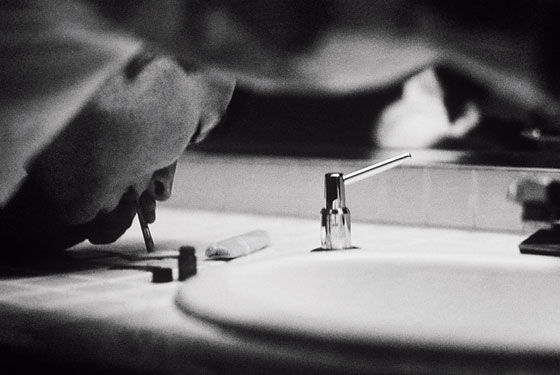
I first remember hearing the Y-word in ’83, when I was living in the East Village... I was enjoying a hung-over midday breakfast (we didn’t use the word brunch in the East Village; it was breakfast whenever you woke up)... An ostentatiously besplattered painter was sitting next to me at the counter, and I heard him mutter, “Fucking yuppies.” I looked up to see a young couple I myself would have characterized as “preppy” waiting to be seated. They looked as if they were visiting from the Upper East Side—all chinos and oxford cloth. We were all uniformly nonconformist in our black jeans and our black Ramones and Television T-shirts. As a Williams alum, I knew all about preppies even before they’d gone mainstream with the publication of The Official Preppy Handbook in 1980. My younger brother, a Deerfield senior, was a preppy. Many of my classmates were preppies. But this yuppie thing was new to me.
The term probably first appeared in print in 1983, when columnist Bob Greene wrote a piece about former Yippie leader Jerry Rubin, who was hosting “networking” events at Studio 54. Greene quoted a participant as saying that Rubin had gone from being the leader of the Yippies to the leader of the yuppies. The neologism stood for Young Urban Professionals and might have gone down in history as yups if not for the Rubin connection. The term yuppies suggested a certain evolutionary—or devolutionary—trajectory from the hippie and the Yippie. The story had everything—the double irony of the revolutionary trickster turned entrepreneurial capitalist cheerleader and the setting in the glam palace of mindless hedonism, as well as a zippy catchphrase that actually seemed to describe an instantly recognizable new minority. Once we had a name for them, we suddenly realized that they were everywhere, like the pod people of Invasion of the Body Snatchers—especially here in New York, the urbanest place of all. We might have even recognized them as us.
From the beginning, there was a certain subject/object confusion associated with the yuppie concept, a certain “we have met the enemy and he is us” self-reflexivity to the phenomenon. Downtown mohawked squatters aside, it was sometimes hard to find a Manhattanite without some taint of the new lifestyle. Did gym membership qualify you as a yuppie? Snorting coke? Eating raw fish? When I heard a movie agent slinging the term at a group of bankers at the Odeon, I wondered about pots and kettles.
“Who are all those upwardly mobile folk with designer water, running shoes, pickled parquet floors, and $450,000 condos in semi-slum buildings?” asked Time magazine in its January 9, 1984, issue. “Yuppies,” we were informed, “are dedicated to the twin goals of making piles of money and achieving perfection through physical fitness and therapy.” The Yuppie Handbook, which had just been published, defined its subject: “(hot new name for Young Urban Professional): A person of either sex who meets the following criteria: (1) resides in or near one of the major cities; (2) claims to be between the ages of 25 and 45; (3) lives on aspirations of glory, prestige, recognition, fame, social status, power, money, or any and all combinations of the above; (4) anyone who brunches on the weekends or works out after work.”
Apparently, the creatures anatomized in The Yuppie Handbook were just common enough to elicit recognition, but not so general as to provoke a shrug. The concepts of “brunching” and “working out” were apparently new and humorous. A few of their defining characteristics—dhurrie rugs, potted ferns, pickled parquet floors—sound suitably dated. But many more—European automobiles, gourmet kitchens, computer literacy, designer clothing, and sushi—fail 25 years later to convey the exoticism that the authors seem to have intended. Oh, those wacky yuppies, eating raw fish and going to the gym.
read more
17 July 2008
Cool and creepy
 all at once...
And, kind of romantic too.
Ryan is a friend of a friend. Both he and his gf are pretty cool people. I'm glad Gawker picked it up. Some of the comments were pretty funny, but some seemed meanspirited, which is pretty New York for ya.
09 July 2008
The New York City Waterfalls

The New York City Waterfalls, whose spigots open at the end of the month and run until October...are a pet project of Michael Bloomberg, who is rumored to have personally paid much of the tab and whose office steered the project through a byzantine permit process... Robert Benazzi, the hydraulics designer working with Eliasson, created a system that will suck up the East River, lift it ten stories into the air, and drop it back down, thousands of gallons a minute. He says the only comparably complex job in his 40-year career was designing the sprinkler system for the Sears Tower.
Eliasson [is] a 41-year-old Danish-Icelandic artist who lives in Copenhagen, works in Berlin, and currently has a retrospective at the Museum of Modern Art and P.S. 1... Many of his best-known works explore architecture and the mechanics of perception, almost as if the fantastical imaginings of Buckminster Fuller were reinterpreted by a cognitive scientist. Eliasson’s work is most compelling, however, in its visceral embrace of beauty and wonder, prompting the kinds of basic questions that most of us stopped asking when we were 7 years old.
The waterfalls, he hopes, will provoke New Yorkers to raise similar questions about something we habitually ignore. “You take the water around Manhattan for granted,” Eliasson says... To help restore our sense of engagement with that landscape, he wants “to make water explicit.” It’s a phrase he often employs. “Falling water, it makes a sound, it engages a whole different range of senses. You see gravity. To make it explicit is to take it, hold it up, and let it fall.”
 How it works
22 March 2008
He said what?
Panhandler on the F train: Hello. Many of you recognize me or my sister since one of us comes through this train at least once a day. I am collecting donations of food, clothing or money to help the homeless. If you have food or clothing, please put your money back in your wallet. I would rather have the food and clothing. I guarantee that by the end of today, we will have given away all the food and clothes we received.
I was at the other end of the car. I raised my hand so he could see that I had a few bills to contribute.
Panhandler, once he reached the other end of the subway car: If you happen to be attractive, please put your money away and stand up and give me a hug instead.
I laughed and put my money in his bucket.
I was at the other end of the car. I raised my hand so he could see that I had a few bills to contribute.
Panhandler, once he reached the other end of the subway car: If you happen to be attractive, please put your money away and stand up and give me a hug instead.
I laughed and put my money in his bucket.
21 July 2007
He said what?
I can't decide if I should keep running or not. On one hand, I received two marriage proposals after my run this morning, but on the other hand, I seem to attract the wrong sorts of men.
After the Run for Central Park four-miler this morning, I took my time leaving the Park. On my way out, a homeless man sitting on a park bench told me I looked beautiful. He asked if I'd marry him.
I took the train down to W 4th, and on my way back to my apartment, three homeless men were sitting on a stoop. One of the was white, and the other two were black. The white one tells me I'm beautiful and wants to know if I'd marry him. It was my second marriage proposal of the day, so I had already had practice turning them down. As I walk by, I tell him that everyone wants to marry me, but that I have no interest in getting married.
Behind me, I heard the other two guys chortle, and one of them says to my rejected suitor, "It's because she don't want to marry no white guy."
Subscribe to:
Posts (Atom)


